

Researchers from Universitas Padjadjaran, Indonesia, including Muhamad Deni Johansyah, Sukono, and colleagues, in collaboration with Naser Hosseini (Islamic Azad University, Iran) and Sardar M.N. Islam (Victoria University, Australia), have proposed a new chaotic butterfly attractor model to assess economic stability in financial systems.
The problem addressed in this study is that traditional economic models are often unable to capture the complex and nonlinear dynamics present in modern financial systems. Sudden fluctuations, instabilities, and crises cannot be fully explained with linear models, requiring new approaches rooted in chaos theory.
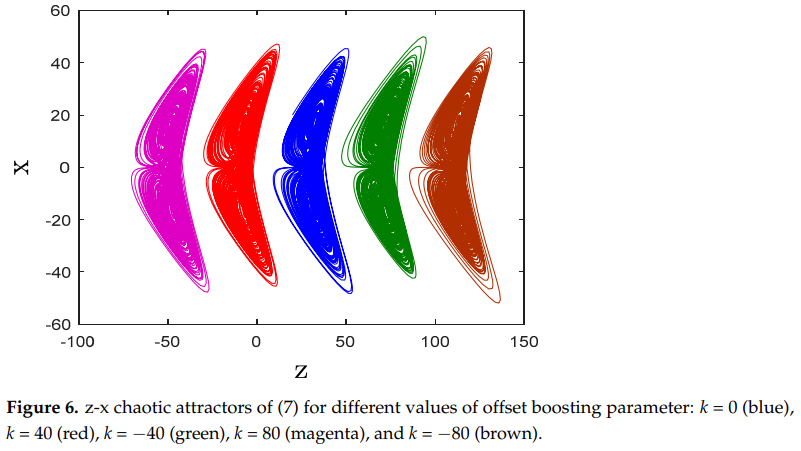
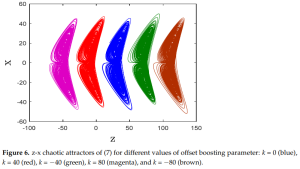
To tackle this, the authors developed a novel chaotic system inspired by the butterfly attractor, applying mathematical analysis and numerical simulations. They examined system behavior using phase portraits, bifurcation diagrams, and Lyapunov exponents, while also implementing control strategies to stabilize chaotic dynamics. This provides a framework to better understand how economies transition between stability and instability.
The study concludes that the butterfly attractor model effectively demonstrates the presence of chaos and multistability in financial systems, and that stabilization techniques can guide economies toward more stable trajectories. The findings have implications for policymakers, financial regulators, and researchers seeking to manage systemic risks.
This research contributes to the United Nations Sustainable Development Goals (SDGs):
- SDG 8 (Decent Work and Economic Growth): by offering tools to support financial stability and sustainable growth.
- SDG 9 (Industry, Innovation and Infrastructure): by applying innovative mathematical modeling for robust economic systems.
- SDG 17 (Partnerships for the Goals): by highlighting international research collaboration on global financial challenges.
Overall, this study shows how chaos theory and nonlinear modeling can enhance our understanding of financial system stability, offering new pathways for resilience in a rapidly changing global economy.
05/Mat/2025