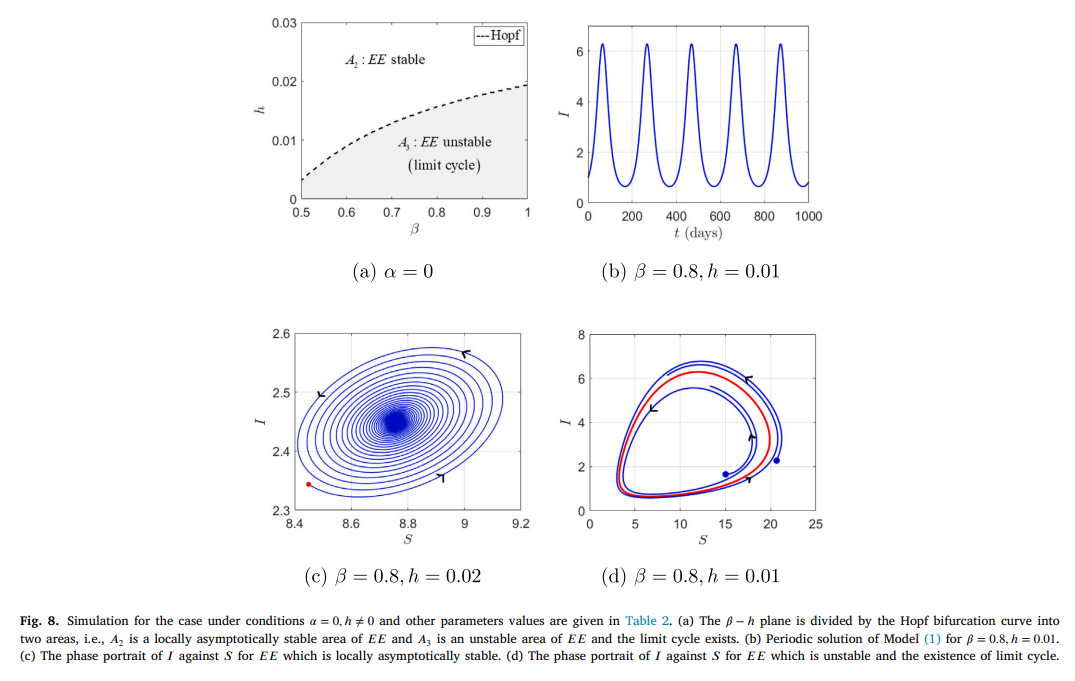

Researchers Anita Triska from the Department of Mathematics, Universitas Padjadjaran, Indonesia, and Mona Zevika from the Research Center for Applied Zoology, National Research and Innovation Agency (BRIN), Bogor, Indonesia, have developed a mathematical model to study anthrax transmission in herbivorous animals, focusing on the effects of vaccination and harvesting as control strategies.
The problem addressed is that anthrax remains a serious zoonotic disease in livestock populations, especially in regions where vaccination coverage is limited and management strategies are inconsistent. The disease threatens both animal health and food security, while also posing risks to human health.
To address this challenge, the authors constructed and analyzed a partial differential equation model to simulate the dynamics of anthrax transmission under different conditions of vaccination and harvesting. The model helps to identify thresholds and strategies that could effectively reduce disease prevalence in animal populations.
The study concludes that combining vaccination programs with harvesting strategies can significantly curb the spread of anthrax among herbivorous animals. The model provides valuable insights for policymakers and veterinary authorities to design effective disease management policies.
This research contributes to multiple United Nations Sustainable Development Goals (SDGs):
- SDG 3 (Good Health and Well-Being): by reducing the risk of zoonotic disease transmission.
- SDG 2 (Zero Hunger): by protecting livestock health and food security.
- SDG 15 (Life on Land): by safeguarding biodiversity through healthier animal populations.
- SDG 17 (Partnerships for the Goals): through collaboration between mathematics, veterinary science, and public health.
Overall, this study shows how mathematical modeling can serve as a powerful tool for tackling zoonotic diseases and supporting sustainable livestock management.
12/Mat/2025