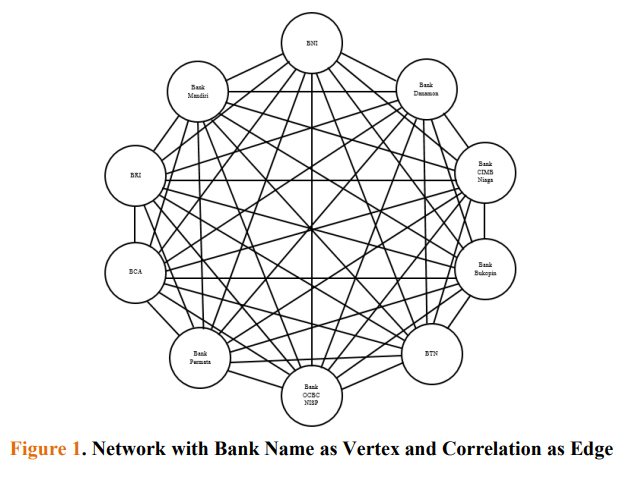




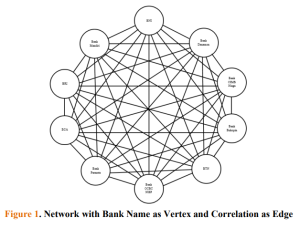
A research collaboration by Mokhammad Ridwan Yudhanegara from Universitas Singaperbangsa Karawang, Edwin Setiawan Nugraha from President University, Sisilia Sylviani from Universitas Padjadjaran, Karunia Eka Lestari from Universitas Singaperbangsa Karawang, and Ebenezer Bonyah from Akenten Appiah-Menka University of Skills Training and Entrepreneurial Development, Ghana, has developed a clustering method that transforms correlation coefficient values into distance measures within a metric space using betweenness centrality.
The problem addressed is that traditional clustering methods often struggle to capture complex relationships in data, particularly when correlation values are the main indicator of similarity. Standard approaches may fail to fully exploit the structural properties of correlation-based networks.
To solve this, the researchers proposed a transformation that converts correlation coefficients into distance values, allowing data points to be analyzed within a metric space. By applying betweenness centrality, the model identifies key relationships and structures, enabling more accurate and meaningful clustering results.
The study demonstrates that this approach provides a more robust clustering framework, especially for time-period data where correlations fluctuate. It enhances the interpretation of relational data and opens new avenues for applications in finance, education, and network analysis.
This research contributes to several United Nations Sustainable Development Goals (SDGs):
- SDG 9 (Industry, Innovation, and Infrastructure): by developing advanced methods for data analysis and clustering.
- SDG 4 (Quality Education): through innovations in mathematics and applied data science that enrich teaching and research.
- SDG 17 (Partnerships for the Goals): by fostering collaboration between Indonesian and Ghanaian institutions.
Overall, this study shows how mathematical transformations and network theory can be combined to improve clustering methods, strengthening the role of applied mathematics in data-driven decision-making.
18_Mat_2025