




A research collaboration by Sukono, Riaman, and Yuyun Hidayat from Universitas Padjadjaran, Indonesia, Puspa Liza Binti Ghazali and Mustafa Mamat from Universiti Sultan Zainal Abidin, Malaysia, Riza Andrian Ibrahim from Universitas Padjadjaran, Indonesia, and Aceng Sambas from Universiti Sultan Zainal Abidin, Malaysia, has proposed a new price model for flood catastrophe bonds (cat bonds) with multiple trigger indices.
The problem addressed is that floods are among the most devastating natural disasters, causing severe economic losses and damage to households. Traditional insurance mechanisms often fail to provide sufficient coverage for large-scale flood events. Catastrophe bonds offer an innovative financial instrument to transfer disaster risk, but accurate pricing requires incorporating realistic triggers linked to flood impacts.
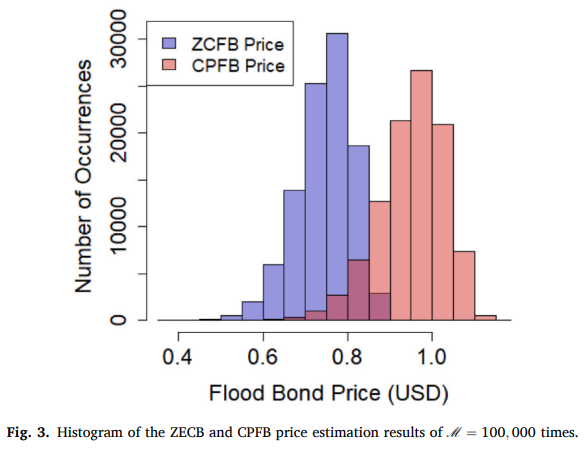
To tackle this, the researchers developed a price model for flood bonds using two key trigger indices: aggregate economic losses and the maximum number of submerged houses. By combining these indices, the model provides a more comprehensive and fair assessment of risk, ensuring that payouts are more closely aligned with actual flood damages.
The study demonstrates that the multiple-trigger approach improves bond pricing accuracy compared to single-trigger models. This contributes to strengthening financial resilience against natural disasters and provides better protection for vulnerable communities.
This research contributes to multiple United Nations Sustainable Development Goals (SDGs):
- SDG 11 (Sustainable Cities and Communities): by enhancing financial preparedness for urban flood risks.
- SDG 13 (Climate Action): by addressing the increasing impacts of climate-related disasters through innovative financial instruments.
- SDG 8 (Decent Work and Economic Growth): by protecting economies and livelihoods from catastrophic flood losses.
- SDG 17 (Partnerships for the Goals): through cross-country collaboration between Indonesian and Malaysian institutions.
Overall, this study highlights how advanced mathematical and financial modeling can support disaster risk reduction, providing innovative tools for climate resilience and economic stability.
19_Mat_2025