

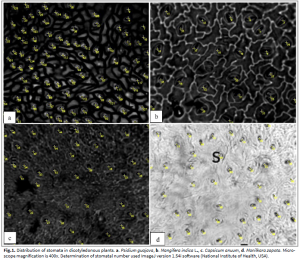
A new study published in Plant Science Today explores how altitude influences the microscopic leaf structures known as stomata, which regulate gas exchange and water use in plants. Researchers from Padjadjaran University and the University of Muhammadiyah Bengkulu compared monocot and dicot plant species grown in lowland (Bengkulu City) and highland (Kepahyang Regency, Sumatra) environments.
Summary of the Paper
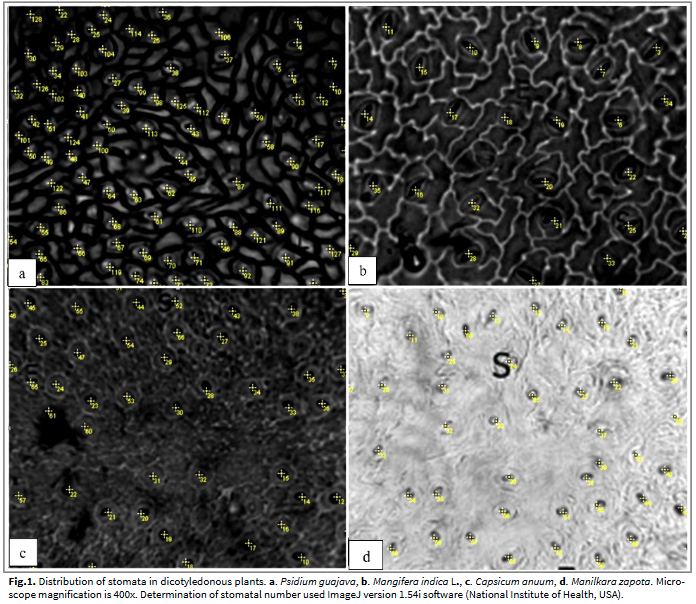
The team examined 144 leaf samples from eight species—including chili, mango, sapodilla, guava, coconut, taro, turmeric, and rice—representing both monocots and dicots. Using microscopy and statistical analysis, they assessed stomatal type, distribution, number, density, and index.
Findings revealed clear species-specific differences in stomatal type and arrangement: guava exhibited paracytic stomata, chili anisocytic, turmeric tetracytic, taro brachy-paracytic, and rice the grass-specific gramineous type. However, when comparing plants from lowland and highland sites (a 600-meter difference in altitude), there were no statistically significant differences in stomatal number, density, or index across species.
The authors conclude that within this altitude range, other factors—such as light intensity, humidity, and CO₂ concentration—likely have a stronger influence on stomatal traits than altitude alone.
Why It Matters
Stomata are vital for balancing carbon dioxide uptake for photosynthesis and water loss through transpiration. Their characteristics directly affect plant productivity, drought tolerance, and resilience to climate stress. Understanding how stomatal traits respond to environmental changes can help identify crop varieties better suited for climate-resilient agriculture.
This study emphasizes that altitude alone is not always a decisive factor in shaping stomatal traits. Instead, plant adaptation depends on a complex interaction of environmental and genetic influences. These insights are essential for plant physiologists, ecologists, and breeders aiming to develop crops that can withstand variable conditions such as temperature fluctuations, drought, and changing CO₂ levels.
Connection to the Sustainable Development Goals
The research directly relates to SDG 13: Climate Action, which calls for strengthening resilience and adaptive capacity to climate-related impacts. By deepening our understanding of how plants regulate water and gas exchange under different environmental conditions, this study contributes to strategies for sustainable crop production in the face of climate change.
Looking Ahead
The authors recommend expanding future research to include broader altitude ranges and additional species. They also suggest considering microclimatic conditions and genetic variability, which may play an even greater role in stomatal adaptation than altitude. Such knowledge could guide breeding programs for crops optimized for water-use efficiency and carbon capture in diverse ecosystems.
As agriculture faces mounting challenges from global warming, this study offers valuable evidence that plant resilience depends on multiple ecological factors, not altitude alone—a reminder of the complexity of nature’s adaptive mechanisms.
DOI: https://doi.org/10.14719/pst.4399
11/Bio/2025