


The rise of antibiotic-resistant bacteria, often called superbugs, is one of the most pressing health threats of our time. To address this challenge, researchers are developing new ways to fight harmful microbes without relying solely on traditional antibiotics. One promising approach is antibacterial photodynamic therapy (PDT), which uses light-activated materials to kill bacteria safely and effectively.
A New Antibacterial Material
In this study, scientists successfully synthesized a ZnO/Ag₂O p-n heterojunction nanocomposite, a combination of zinc oxide (ZnO) and silver oxide (Ag₂O). The material was carefully tested using advanced techniques such as electron microscopy and X-ray photoelectron spectroscopy to confirm its structure and properties.
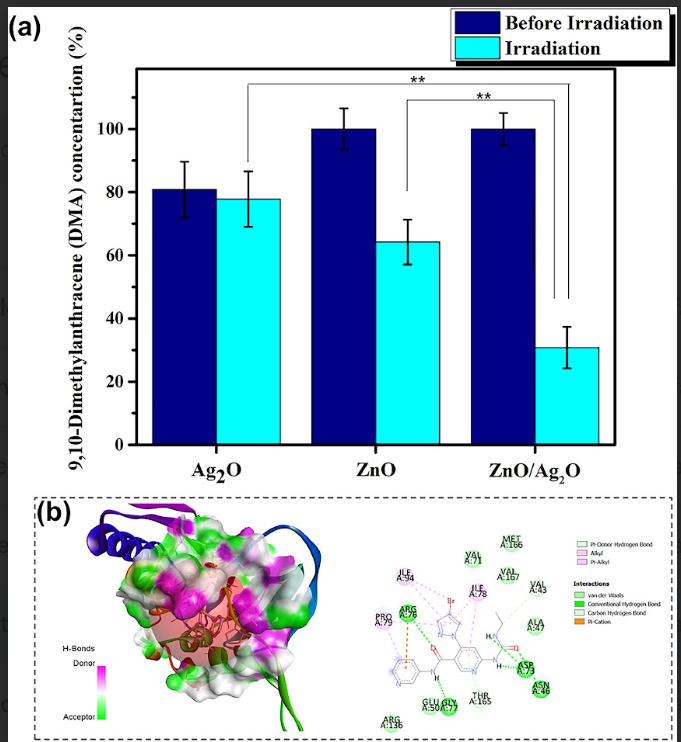
When exposed to red light at 660 nm, this ZnO/Ag₂O material showed remarkable antibacterial activity against Escherichia coli (E. coli) and Staphylococcus aureus (S. aureus)—two bacteria that commonly cause infections and are becoming increasingly resistant to antibiotics.
Safe for Humans, Deadly for Bacteria
Unlike many harsh antibacterial treatments, this nanocomposite proved to be biocompatible, meaning it does not harm normal human cells. The study also used in silico molecular docking (computer simulations) to show how the material strongly interacts with bacterial proteins, further confirming its antibacterial potential.
Why It Matters
This research opens new possibilities for safer, light-based antibacterial therapies that could reduce our dependence on antibiotics and slow down the spread of drug resistance. By finding alternative solutions, we move closer to achieving SDG 3: Good Health and Well-Being, which emphasizes the importance of combating infectious diseases and ensuring access to effective treatments.
Additionally, the use of sustainable nanomaterials supports SDG 9: Industry, Innovation, and Infrastructure, highlighting the role of scientific innovation in building resilient healthcare technologies.
Toward a Healthier Future
The ZnO/Ag₂O nanocomposite demonstrates how nanotechnology and light can work together to fight dangerous bacteria in a way that is both effective and safe. This breakthrough brings us a step closer to innovative medical treatments that could help protect global health in the fight against superbugs.
Source: https://www.scopus.com/pages/publications/85204219659
18/Fis/2025