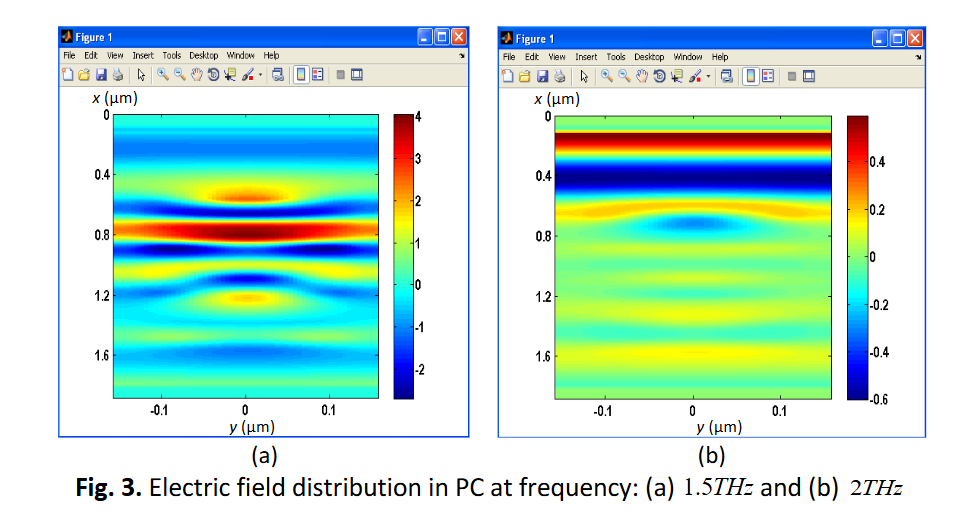


Researchers have taken an important step toward developing more precise optical sensors by studying the unique behavior of photonic crystal structures. Using advanced simulations with the Finite Difference Frequency Domain (FDFD) method, the team analyzed how light interacts with these structures and discovered a phenomenon known as double resonance—two distinct transmission peaks at specific wavelengths.
The study revealed that when a metal layer is used as the first defect in the crystal, the sensitivity of the structure increases significantly compared to when a dielectric layer is used. This higher sensitivity is linked to the formation of surface plasmon resonance (SPR), a powerful effect that enhances the electric field at the interface of metal and dielectric materials.
By carefully adjusting the thickness of the defect layer, the sensitivity of these photonic crystals can be tuned, making them promising candidates for advanced sensor applications. For instance, they could one day be used in environmental monitoring, medical diagnostics, or detecting chemical pollutants, where detecting small changes quickly and accurately is critical.
This research contributes to the Sustainable Development Goal (SDG) 9: Industry, Innovation, and Infrastructure, as it provides a scientific foundation for the development of next-generation sensor technology that can strengthen innovation and industrial capabilities.
#PhotonicCrystals #SensorTechnology #SDG9
Link to the paper: https://www.scopus.com/pages/publications/85193707954
22/Mat/2025