

Advancing Smart Materials for Cleaner Energy Sensors
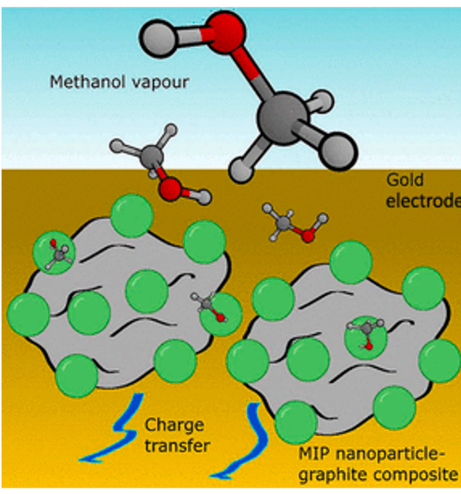

Researchers are pushing the boundaries of material science with innovative developments in Molecularly Imprinted Polymers (MIPs)—a breakthrough technology designed for highly selective alcohol detection. This advancement is not only transforming the food, pharmaceutical, and clinical industries but also offering crucial support for the alcohol-based fuel sector, which is becoming increasingly important in the transition toward cleaner energy sources.
Alcohol detection is vital in many areas, from ensuring product safety and quality to monitoring fuel efficiency. Traditional techniques such as chromatography, refractometry, and spectroscopy are widely used but often require costly equipment, longer processing times, and complex procedures. MIPs, however, provide a smarter alternative. These polymers are engineered with microscopic cavities that act like “molecular locks,” able to recognize and bind only to specific alcohol molecules. This makes them highly selective, reusable, and more efficient than conventional methods.
The study highlights that MIPs synthesized using non-covalent approaches are generally more selective compared to semi-covalent ones. Even more promising is the combination of MIPs with inorganic nanoparticles, creating advanced nanocomposite materials. These composites demonstrate a sensitivity up to four times higher than pure polymers, thanks to improved electron transfer and larger conductive surfaces that enhance sensor performance.
The potential applications are vast. In the energy sector, these materials can improve the accuracy and efficiency of alcohol-fuel monitoring systems, helping ensure consistency and reliability in renewable energy production. In food and pharmaceuticals, they provide a dependable method for detecting alcohol content to guarantee product safety. Clinically, they could support more precise diagnostics where alcohol detection plays a role.
With the world striving for sustainable and affordable energy solutions, these advancements in MIPs represent a significant step forward. By enabling more efficient alcohol detection, they directly support innovations in renewable fuel technology, aligning with the global commitment to clean energy and sustainability.
#UnpadResearch #MIP #CleanEnergy #AlcoholSensor
Link to the paper: https://www.sciencedirect.com/science/article/pii/S2214180424001119
29/Kim/2025