

Blending Traditional Wisdom and AI: Lunar Calendar Boosts Accuracy in Rainfall Forecasting
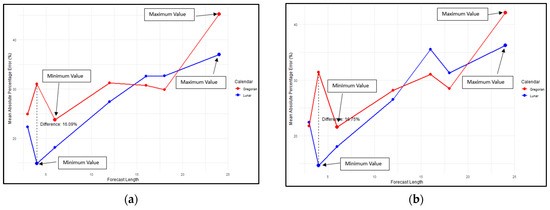

Lecturers from Universitas Padjadjaran have introduced an innovative approach to improving rainfall prediction accuracy by incorporating the lunar calendar into machine learning models. Their study, recently published in Applied Science, demonstrates how integrating non-Gregorian time systems can boost forecasting performance.
The study, conducted by Darmawan et al. compares rainfall prediction models based on the Gregorian calendar with those using the lunar calendar. By applying advanced methods such as Long Short-Term Memory (LSTM) and Gated Recurrent Unit (GRU), the lecturers found that lunar calendar–based models achieved higher accuracy and lower error rates (MAPE and MBE).
Forecasts using the lunar calendar proved to be more reliable for periods of 3, 4, 6, and 12 months, while Gregorian-based models tended to underestimate rainfall values. This breakthrough highlights the potential of adopting alternative calendar systems in data modeling, offering valuable insights for climate science, agriculture, disaster preparedness, and beyond.
In addition to advancing machine learning and forecasting techniques, the study supports the United Nations Sustainable Development Goals (SDGs), particularly:
- SDG 2 (Zero Hunger): improving agricultural planning through more accurate rainfall predictions.
- SDG 13 (Climate Action): strengthening resilience to climate variability with better forecasting tools.
- SDG 9 (Industry, Innovation, and Infrastructure): encouraging innovative applications of AI in environmental science.
This study not only refines forecasting methodologies but also demonstrates the contributions of lecturers in applying AI for practical and sustainable solutions.
Source: https://www.scopus.com/record/display.url?eid=2-s2.0-85215682374&origin=resultslist
19/Stat/2025