

Correlation Between Flying Insect Diversity and Environmental Factors in Various Land Use Types in Paseh District, Sumedang Regency, West Java
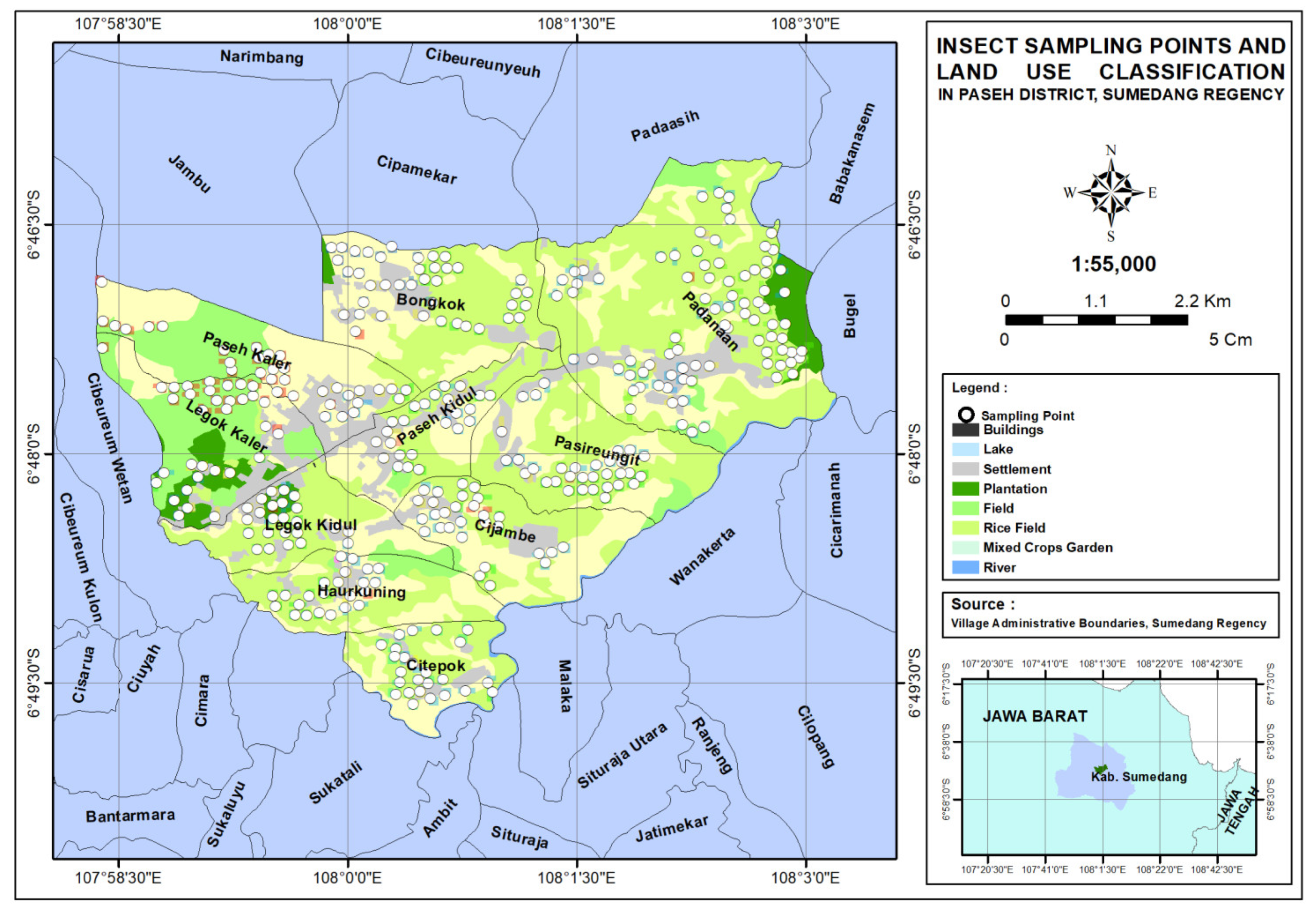

A new study published in Diversity explores how environmental factors such as temperature, humidity, wind speed, light intensity, and altitude influence the diversity of flying insects in different land-use types in Paseh District, Sumedang Regency, West Java. Conducted by researchers from Universitas Padjadjaran, the study identified 155 species of flying insects across gardens, plantations, rice fields, and mixed gardens, with mixed gardens hosting the highest diversity.
Using multivariate analysis, the research team found that temperature was the most influential factor, showing a strong positive correlation with insect diversity across land uses. Wind speed also positively influenced diversity in gardens, while altitude and humidity had varying effects depending on the land type. For instance, altitude correlated negatively with insect diversity in mixed gardens but positively in rice fields.
The findings underscore the intricate relationship between insects and their environment. “Temperature affects the behavior, metabolism, and distribution of insects, while humidity and altitude regulate reproduction, development, and survival,” the authors note. Such insights are especially relevant as land-use change, such as toll road construction in the Paseh District, continues to alter ecosystems.
Why this matters
Insects play critical roles in ecosystems, from pollination and pest control to nutrient cycling and soil fertility. Their diversity ensures the resilience of ecosystems and agricultural productivity. However, rapid land-use changes and climate variability threaten these insect populations. By linking insect diversity with measurable environmental factors, this study provides essential data to guide conservation strategies and sustainable land management practices.
Link to the Sustainable Development Goals
The research directly contributes to SDG 15: Life on Land, which calls for the protection, restoration, and promotion of sustainable use of terrestrial ecosystems and biodiversity. By identifying how different land uses and environmental variables affect insect diversity, the study supports evidence-based approaches to conserving biodiversity while balancing agricultural and infrastructural development.
Looking ahead
The authors recommend that conservation planning in West Java and similar regions consider the role of microclimatic conditions in sustaining insect diversity. They also highlight the need for further research on other variables, such as vegetation types and food source availability, to gain a more comprehensive understanding of insect–environment interactions.
As Indonesia harbors 15% of the world’s insect species, protecting these vital organisms is key to ensuring ecosystem stability and long-term agricultural sustainability.
DOI: https://doi.org/10.3390/d17010002
03/Bio/2025