

Digital Health Technology Interventions for Improving Medication Safety: Systematic Review of Economic Evaluations




A research team from Universitas Padjadjaran, Indonesia, led by Widya Norma Insani, PhD (Department of Pharmacology and Clinical Pharmacy; Centre of Excellence for Pharmaceutical Care Innovation), together with Neily Zakiyah, PhD, Irma Melyani Puspitasari, Prof Dr, Muhammad Yorga Permana, PhD (Bandung Institute of Technology), Kankan Parmikanti, MStat, Endang Rusyaman, Prof Dr, and Auliya Abdurrohim Suwantika, Prof Dr, has conducted a systematic review of economic evaluations to assess the role of digital health technology (DHT) interventions in improving medication safety.
The problem tackled in this study is that adverse drug events (ADEs) remain a leading cause of preventable patient harm worldwide. Digital health tools—such as electronic prescribing, clinical decision support systems, and medication-tracking technologies—are expected to reduce errors, yet their cost-effectiveness and long-term impact remain unclear.
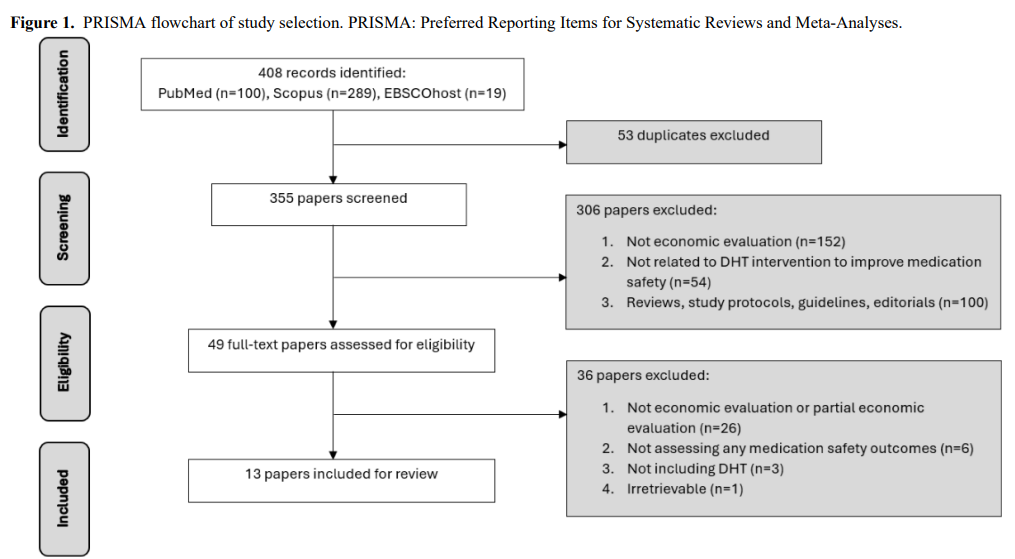
To address this, the researchers systematically reviewed economic evaluations of DHT interventions that specifically target medication safety. The review assessed studies using cost-utility, cost-effectiveness, and cost-benefit analyses across different healthcare systems.
The findings show that many DHT interventions not only improve medication safety by reducing errors but also deliver favorable economic outcomes, including lower healthcare costs and improved quality-adjusted life years (QALYs). However, the authors highlight variation in study quality and call for more robust, large-scale, and long-term evaluations to strengthen the evidence base.
The study concludes that digital health technologies have strong potential to enhance patient safety and reduce healthcare costs, supporting their wider adoption in modern health systems.
This research also advances several United Nations Sustainable Development Goals (SDGs):
- SDG 3 (Good Health and Well-Being): improving patient safety and treatment outcomes.
- SDG 9 (Industry, Innovation, and Infrastructure): fostering innovation in digital health systems.
- SDG 12 (Responsible Consumption and Production): ensuring safer and more responsible use of medicines.
- SDG 17 (Partnerships for the Goals): reflecting collaboration between pharmacy, mathematics, and health economics disciplines.
Overall, this work highlights the growing importance of digital health solutions in building safer, more sustainable, and more efficient healthcare systems.
06/Mat/2025