

From Shrimp Shells to Climate Action: Chitosan-Based Materials for Capturing CO₂
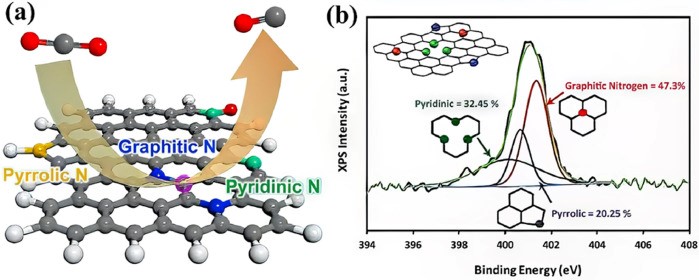


Rising carbon dioxide (CO₂) emissions are one of the main drivers of global warming, and scientists worldwide are racing to find effective solutions for capturing and reducing these emissions. A recent review highlights a promising approach: turning chitosan, a biodegradable material derived from shrimp shells and other natural sources, into advanced carbon materials capable of efficiently trapping CO₂.
Chitosan is rich in nitrogen, making it an ideal candidate for producing what researchers call N-doped carbon. These materials have tiny pores and special active sites that can bind CO₂ molecules effectively. By carefully designing the structure, scientists can increase the material’s surface area, allowing it to capture more carbon while maintaining stability in real-world applications.
The review emphasizes that transforming chitosan into bead-like forms, instead of powders, could make the material much more practical for large-scale use in industries, such as power plants or factories. Beads are easier to handle, less likely to disperse in the air, and offer better mechanical stability. This shift could move the technology closer to real-world deployment.
Beyond just capturing CO₂, this approach also supports sustainability. Using shrimp shell waste and other renewable sources connects carbon capture technology with the idea of a circular economy, where waste is transformed into valuable resources.
This research strongly aligns with:
- SDG 13: Climate Action – by tackling carbon emissions and global warming.
- SDG 12: Responsible Consumption and Production – by turning natural biowaste into high-value, eco-friendly solutions.
The study concludes that with further optimization, chitosan-based N-doped carbon materials could become a key player in building greener and more sustainable technologies for the future.
Source: https://www.scopus.com/record/display.url?eid=2-s2.0-105005518601&origin=resultslist
25/Fis/2025