

HALAL FOOD EDUCATION FROM A CHEMICAL PERSPECTIVE
By Chemical Analysis and Separation Laboratory, Department of Chemistry, Faculty of Mathematics and Natural Sciences, Universitas Padjadjaran
Sumedang, Friday, 31 May 2024
In addition to education and research, lecturers at universities also engage in community service (PKM) in accordance with the Tridharma (Principles of Higher Education). Community service activities can include: the application of appropriate research results, training, outreach, and other activities.
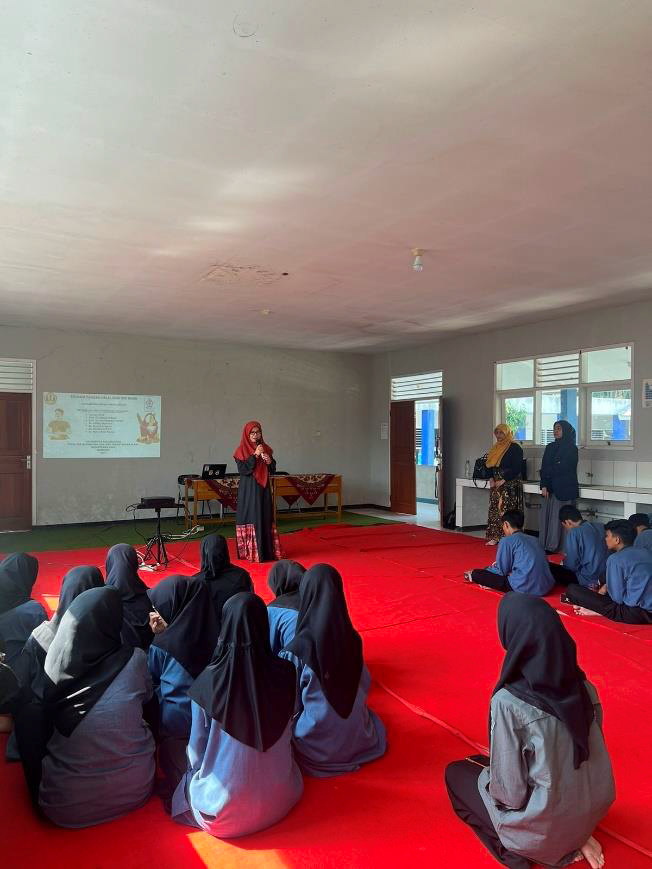
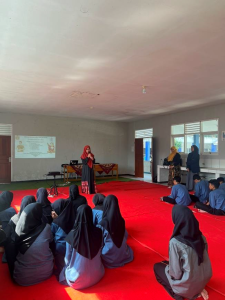
In this PKM, a group of lecturers (lead by Irkham, M.Sc., PhD) in the field of analytical chemistry and separation conducted a training and outreach program on how to identify detection methods for halal food and provided outreach on halal food from a chemical perspective by a team in the Analytical Chemistry and Separation Laboratory, Department of Chemistry, Faculty of Mathematics and Natural Sciences.
Food is anything derived from biological sources (plants, animals, and microorganisms) that is consumed by humans as food or drink. Food provides the nutrients necessary for the growth, maintenance, and health of the human body. Food includes various types of food and drink consumed daily, whether fresh, processed, or fermented. Halal food, from a chemical perspective, means ensuring that all ingredients and processes involved in its production comply with Islamic law. This includes the materials used, processing methods, and production equipment and environment.
Besides providing basic nutrition as a source of growth for living things, especially humans, food also offers additional health benefits, such as yogurt containing probiotics or drinks enriched with vitamins and minerals. Food offers many benefits, but the main issue, particularly the authenticity of halal animal food sources, is crucial from a religious perspective, particularly the prohibition on eating pork in Islam and Judaism (Halal and Kosher). This prohibition also leads to numerous health problems if consumed, including pork, which produces tapeworms, which are dangerous. Furthermore, pork can cause allergic health problems for vegetarians. However, the lower price of pork has led to numerous cases of product counterfeiting by mixing halal ingredients with haram ingredients.
Therefore, knowledge of halal food education from a chemical perspective is crucial. Information and outreach are needed for the public about the importance of recognizing halal food and how to find methods to detect it from a chemical perspective. To this end, a Community Service Program (PKM) was held to introduce halal food from a chemical perspective to students at Al Fallah High School, Cileles Village, Jatinangor, Sumedang.
Contributes to the following SDGs:
#SDGs2 #SDGs4 #SDGs8 #SDGs11
22/Kim/2025