

Indonesia’s EV Transition Holds Promise—but Renewable Energy Growth Is Key
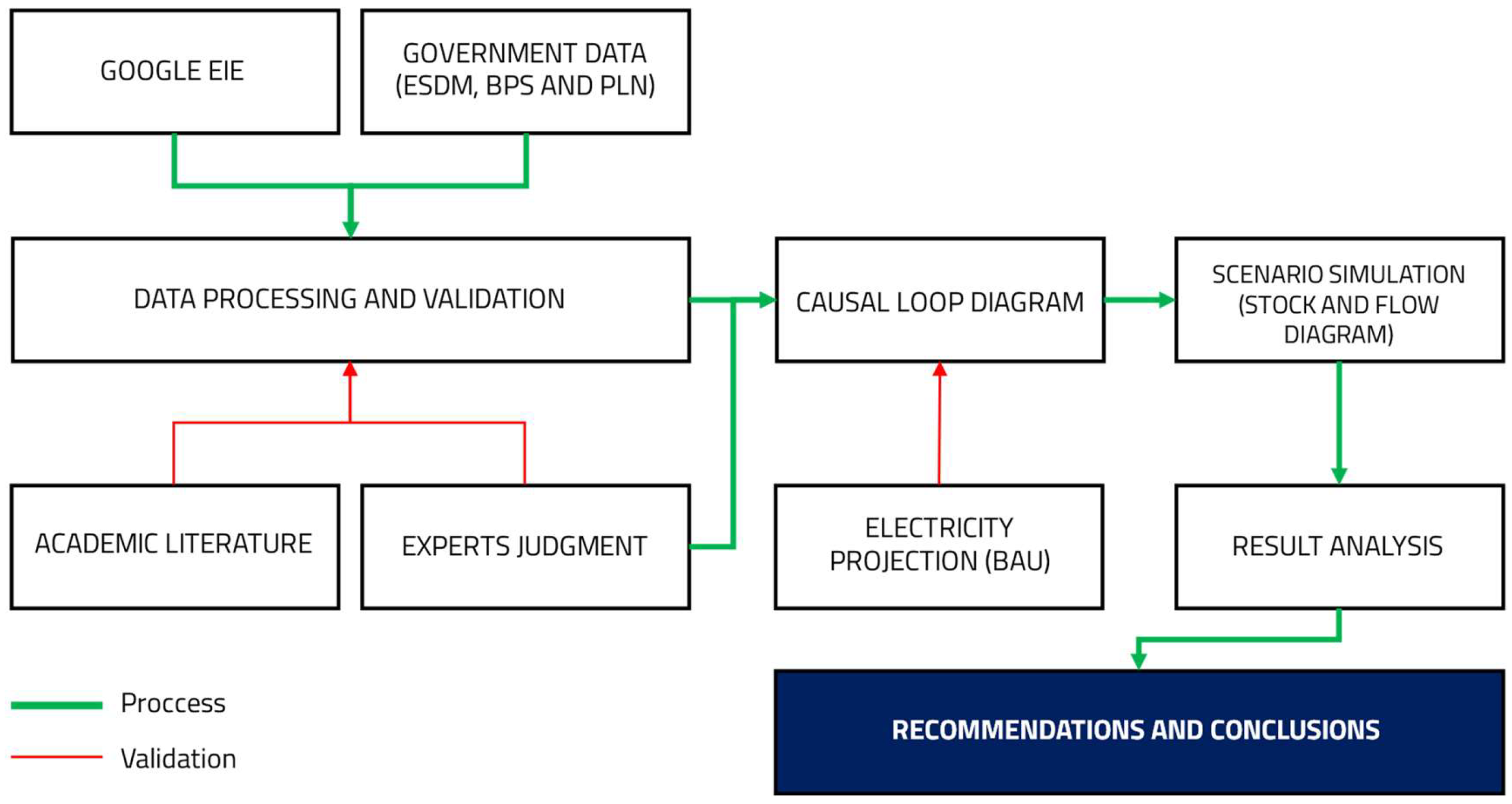
A new study published in Sustainability warns that while electric vehicles (EVs) can reduce Indonesia’s reliance on imported fossil fuels, their environmental benefits will remain limited unless the electricity grid shifts more rapidly toward renewable sources. Conducted by researchers from Universitas Padjadjaran, the study uses a System Dynamics model and data from the Google Environmental Insights Explorer (EIE) in West Nusa Tenggara Province to simulate different EV adoption and energy transition scenarios.
Summary of the Paper
Indonesia has seen a 206% annual growth in EV sales between 2021 and 2023, reflecting strong momentum in clean mobility. However, with fossil fuels still providing 86% of electricity, EVs risk transferring emissions from the transport sector to the power sector.
The study modeled three scenarios:
- Business-as-Usual (BAU): High EV adoption but limited renewable growth. Fuel efficiency improves up to 56%, but emissions still exceed 41 million tons CO₂ by 2050, and electricity shortages appear as early as 2028.
- Moderate Scenario: Balanced EV uptake with renewable growth of 15–32% annually. This reduces fossil fuel imports by 60% and cuts emissions, though reliance on coal remains significant.
- Optimistic Scenario: Aggressive EV adoption with renewable growth of 30–65%. This could eliminate fossil fuel imports entirely but requires massive investment in solar, geothermal, and grid infrastructure.
Why It Matters
Indonesia is one of the world’s largest fuel importers, spending trillions of rupiah annually. Cutting imports could save up to USD 13.6 billion, funds that could be redirected to renewable energy expansion. But without stronger renewable deployment, EVs may become a “false solution,” shifting emissions instead of reducing them.
The study emphasizes that systemic policy integration—combining EV incentives, renewable expansion, and fossil fuel phase-out—is crucial. Local governments can contribute by offering EV tax breaks while raising fuel taxes, and state utility PLN must align renewable growth with rising electricity demand.
Connection to the Sustainable Development Goals
The findings directly support SDG 7: Affordable and Clean Energy, which calls for expanding access to reliable, sustainable, and modern energy. By linking EV adoption with renewable energy development, Indonesia can simultaneously strengthen energy security and cut emissions, aligning with its 2050 Net Zero target.
Looking Ahead
The authors recommend adopting the Moderate Scenario as the most realistic pathway—achieving significant fuel savings and emission reductions without overburdening the grid or fiscal resources. They also call for wider adoption of Google EIE across provinces to improve data-driven planning and emphasize future research should include public transport and behavioral factors in EV adoption.
Ultimately, the study concludes that EVs can help Indonesia move toward sustainable mobility—but only if paired with bold renewable energy policies and cross-sectoral coordination.
DOI: https://doi.org/10.3390/su17104681
19/Bio/2025