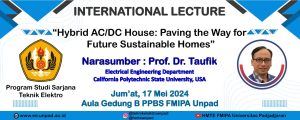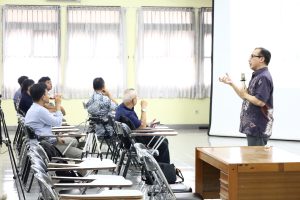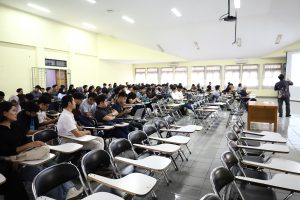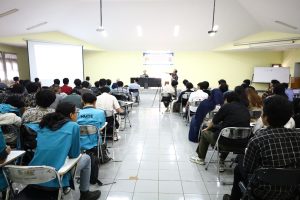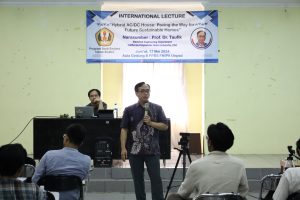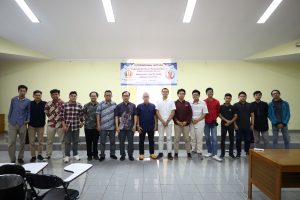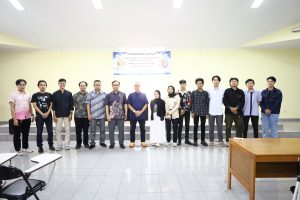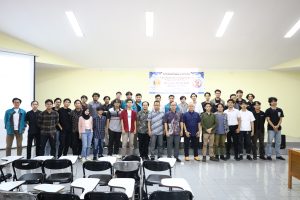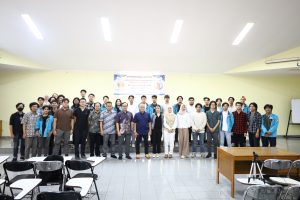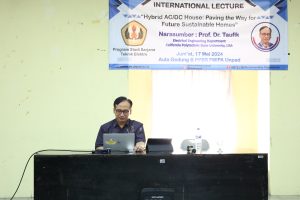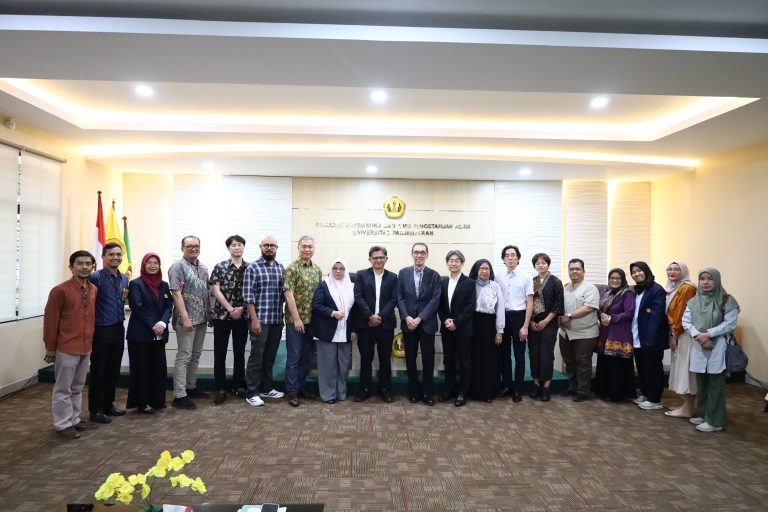


The Electrical Engineering Study Program, Faculty of Mathematics and Natural Sciences, Padjadjaran University holds international lectures to provide new, broader knowledge and insight to its students. The international lecture presented Prof. Taufik (Electrical Engineering Department California Polytechnic State University, USA) is located in the Lecture Room, Hall B, PPBS FMIPA Unpad, lt. 2 Jatinangor. Friday (17/05/2024).
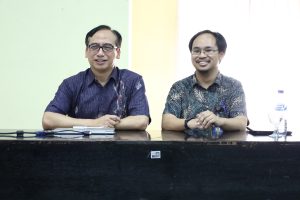
On this occasion, Prof. Taufik gave material entitled “Hybrid AC/DC House: Paving the Way for a Sustainable Home of the Future”. The lecture was attended by the Head of the Electrical Engineering Study Program, FMIPA Unpad, Dr. Mohammad Taufik, M.Sc., Head of the Electrical Engineering Department, FMIPA Unpad Dr. Darmawan Hidayat, MT. and Septian Ari Kurniawan, S.T,. M.T who also serves as moderator. Prof. Dr. Taufik delivered a presentation about DC electricity and AC electricity
According to him, DC (Direct Current) electricity, with a constant current flow from positive to negative, provides a stable electricity supply and is often used in electronic devices such as batteries and smartphones. Meanwhile, AC (Alternating Current) electricity flows with periodic changes in direction and is usually used in electronic equipment at home such as washing machines. These two types of current have an important role in designing an efficient and intelligent electrical system, which is the basis of the Net Zero Energy Homes (NZEH) concept. NZEH is a home designed to use energy efficiently, both environmentally and economically, by utilizing renewable energy and integrating advanced and superior building systems, most of which operate on DC electricity. With the trend of increasing DC loads, seen from 20% in 2000 to 30% in 2018 in the US, homes of the future will need to be ‘smart’ in managing energy consumption. This includes integrating DC systems with existing AC equipment, such as AC units, to ensure maximum efficiency without sacrificing comfort or function, reflecting a harmonious blend of technical understanding and practical application in achieving energy efficiency.