

LukaKu for Wound Detection: When AI Meets Healthcare
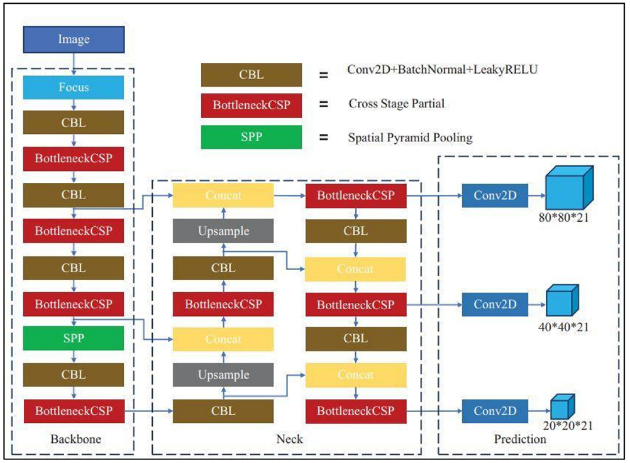

In an era where smartphones have become daily companions, researchers from the Department of Electrical Engineering, Faculty of Mathematics and Natural Sciences (FMIPA), Universitas Padjadjaran (Unpad) are taking a bold step in healthcare innovation. Their study, “A mobile application LukaKu as a tool for detecting external wounds with artificial intelligence”, introduces LukaKu, a mobile application designed to automatically detect six types of external wounds using image-based AI technology. By integrating YOLOv5 deep learning models, LukaKu not only identifies wounds but also provides first aid steps and recommended medication, making healthcare guidance more accessible to everyone.
The research tested various YOLOv5 versions—ranging from YOLOv5n to YOLOv5x—by comparing their precision, recall, F1-score, and mean average precision (mAP) values. Through rigorous model training and validation using wound image datasets, the team identified the best-performing model and implemented it into the mobile application. This ensures that users benefit from a reliable AI assistant that is both practical and easy to use. LukaKu, therefore, serves as a bridge between cutting-edge machine learning research and real-world healthcare needs, empowering communities to respond effectively to injuries.
This innovation strongly supports Sustainable Development Goal (SDG) 3: Good Health and Well-being by providing accessible, early-response healthcare tools. LukaKu is expected to keep evolving—adding more wound types, improving accuracy with larger datasets, and classifying wounds based on urgency (self-care, expert treatment, or emergency). With this initiative, Electrical Engineering Unpad demonstrates how technology and healthcare can come together to improve lives, marking another step toward a healthier and smarter society.
Link: https://www.sciencedirect.com/science/article/pii/S2666521225000031?via%3Dihub
#UnpadResearch #HealthcareInnovation #SDG3
05/TE/2025