

Making Biodiesel Last Longer with Smarter Catalysts
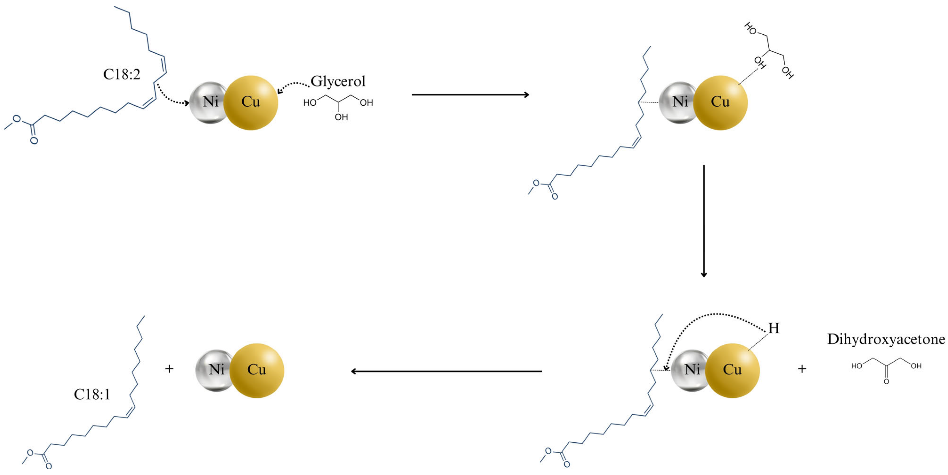

As the world seeks cleaner and more sustainable energy sources, biodiesel has emerged as an important alternative to fossil fuels. However, one of the biggest challenges with biodiesel is its stability—over time, it can oxidize and lose quality. Researchers from Universitas Padjadjaran have found a promising way to improve biodiesel stability using a smart chemical process called catalytic transfer hydrogenation, with glycerol acting as a hydrogen donor.
The study tested several types of bimetallic catalysts, including Zn-Cr-bicarbonate, Zn-Cr-formate, Zn-Cr-Ni, and Cu-Ni/SiO₂. Among them, the Cu-Ni/SiO₂ catalyst combined with DMF solvent and 10% glycerol feed delivered the best results. This combination reduced harmful iodine and peroxide values while significantly boosting biodiesel’s oxidative stability. The findings show that the catalyst’s dual-metal design effectively drives the dehydrogenation–hydrogenation process, making biodiesel more resistant to degradation.
An interesting aspect of this research is the use of glycerol, a byproduct of biodiesel production itself, as the hydrogen donor. This means the process not only improves biodiesel quality but also recycles waste into something useful, adding to its sustainability.
This innovation directly supports Sustainable Development Goal (SDG) 7: Affordable and Clean Energy, which emphasizes the need for cleaner, more reliable fuels. By making biodiesel more stable, the study helps ensure that renewable energy can be stored and used more efficiently, reducing dependence on fossil fuels and supporting the global transition toward sustainable energy systems.
With further development, this approach could play a key role in creating biodiesel that is not only eco-friendly but also more practical for widespread use.
#UnpadResearch #Biodiesel #CleanEnergy
Link to the paper: https://www.mdpi.com/2673-4117/6/5/94
33/Kim/2025