

Mind the Gap: Scientists Review Why Lab-Proven Biopesticides Falter on the Farm
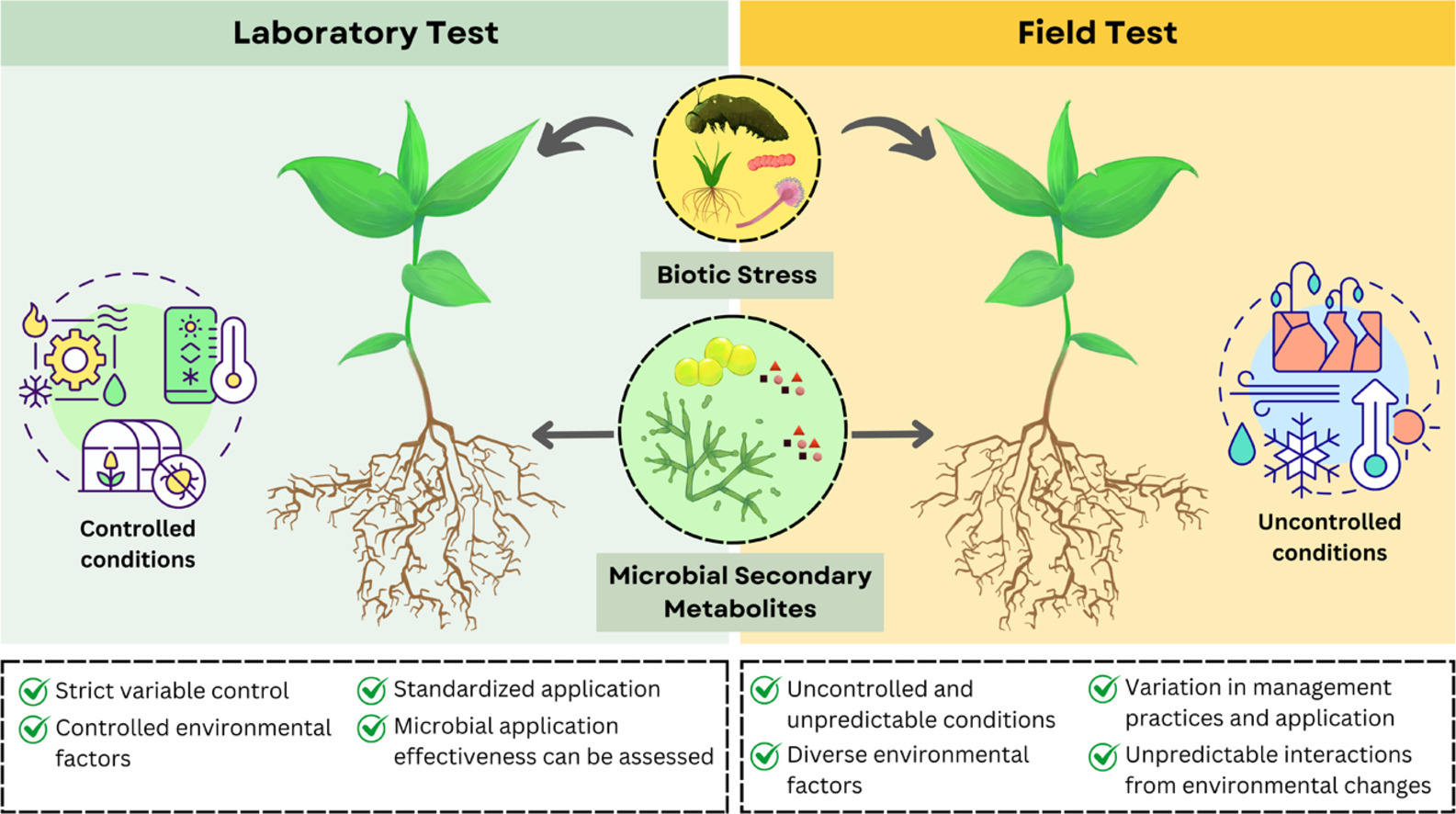

JATINANGOR, INDONESIA – An international team of researchers has published a comprehensive review addressing a critical challenge in sustainable agriculture: why beneficial microbes that show great promise as natural pesticides in the lab often fail to deliver the same results in real-world field conditions. The review, featured in the journal Plant Stress, examines the gap between laboratory and field performance and outlines future directions for making microbial biopesticides a more reliable alternative to synthetic chemicals.
Summary of the Paper
Biotic stress from pests, diseases, and weeds causes an estimated 40% loss in total crop yields globally. While agriculture has long relied on synthetic pesticides, their environmental and health risks are a growing concern. Beneficial microorganisms, which produce their own chemical compounds called secondary metabolites, offer an eco-friendly solution. These metabolites can directly kill or inhibit pests and pathogens or indirectly boost a plant’s own immune system.
The central issue explored in this review is the “lab-field gap”. In the controlled, stable environment of a laboratory, microbial agents often show consistent and potent effects. However, when applied in a field, their performance can be inconsistent or even contradictory. This is due to unpredictable environmental factors like temperature, soil pH, moisture, and competition from other soil microbes, which can alter the production and stability of the beneficial secondary metabolites. The review highlights a stark example where a fungus (Trichoderma harzianum) that helped defend tomatoes against aphids in the lab had no significant effect on them in the field, and even led to an increase in other chewing pests.
The Importance
Successfully bridging the lab-field gap is crucial for the future of sustainable agriculture. This review is important because it synthesizes the current understanding of why these discrepancies occur and proposes a clear path forward. It calls for more rigorous testing under a wider range of conditions, including semi-field trials that mimic real-world environments. The authors emphasize the need to develop more stable and effective formulations, comparing the benefits of using live “microbial inoculants” for long-term effects against “microbial extracts” for immediate, stable action. Advanced strategies like nano-encapsulation are highlighted as a key technology to protect metabolites and ensure their effectiveness on the farm.
Relation to Sustainable Development Goals (SDGs)
This research directly addresses Sustainable Development Goal 12: Responsible Consumption and Production. The review’s entire focus is on advancing biological control agents to reduce the widespread dependence on synthetic chemical pesticides. This aligns with Target 12.4, which calls for the environmentally sound management of chemicals to minimize their adverse impacts on human health and the environment. By tackling the core challenges that prevent microbial biopesticides from being widely adopted, this work paves the way for more sustainable agricultural practices that protect ecosystems and global food systems
Journal Link: https://doi.org/10.1016/j.stress.2024.100720
10/Bio/2025