

Modeling Species Dynamics in Ring-Shaped Habitats with Dispersal and Harvesting
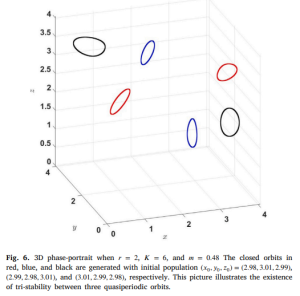
An international research collaboration by Arjun Hasibuan and Asep K. Supriatna from Universitas Padjadjaran, Indonesia, together with Bapan Ghosh from the Indian Institute of Technology Indore, India, has developed a computational model to study the population dynamics of a single species in ring-shaped habitats, incorporating the effects of dispersal and harvesting.
The problem examined is that species populations are increasingly threatened by overharvesting and habitat fragmentation, particularly in ecosystems with unique spatial structures. Understanding how dispersal and harvesting interact in such habitats is essential for biodiversity conservation and sustainable resource management.
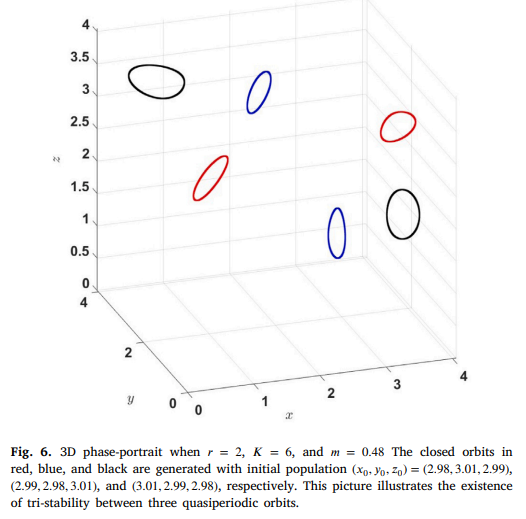
To address this, the researchers applied mathematical and computational modeling to simulate species growth in minimal ring-shaped patches, a simplified yet insightful representation of spatially structured habitats. The model analyzed how dispersal among patches and varying harvesting strategies influence population survival, stability, and potential extinction risks.
The study concludes that both dispersal and harvesting intensity play critical roles in determining species persistence. Properly managed dispersal pathways can enhance population resilience, while excessive harvesting increases the risk of population collapse.
This research contributes to multiple United Nations Sustainable Development Goals (SDGs):
- SDG 15 (Life on Land): by offering strategies to sustain biodiversity and prevent species extinction.
- SDG 14 (Life Below Water): by providing insights also relevant for aquatic species in fragmented habitats.
- SDG 13 (Climate Action): through better understanding of ecological resilience under environmental change.
- SDG 17 (Partnerships for the Goals): by fostering collaboration between Indonesian and Indian institutions.
Overall, this study demonstrates how computational ecology and mathematical modeling can guide conservation strategies and promote sustainable harvesting practices in fragile ecosystems.
13_Mat_2025