

New Study Applies Top2Vec to Decode User Feedback from Mobile Apps
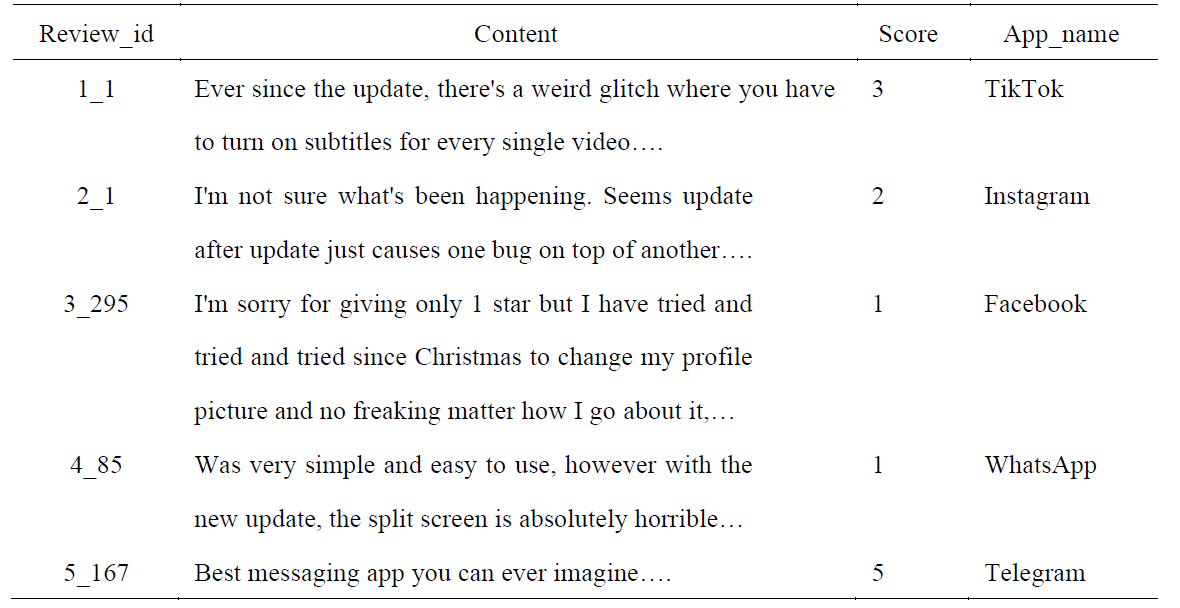

A team of researchers from Padjadjaran University has successfully demonstrated how advanced topic modeling can provide deep insights into mobile app user experiences. Their study, published in Communications in Mathematical Biology and Neuroscience, analyzed 15,000 user feedback entries from 15 different mobile applications using the Top2Vec algorithm, a modern natural language processing tool.
Summary of the Paper
The researchers applied Top2Vec, which combines semantic word embeddings with clustering techniques, to extract hidden themes from vast amounts of unstructured text. Unlike traditional approaches such as Latent Dirichlet Allocation (LDA), Top2Vec automatically determines the number of topics and groups words and documents based on their semantic similarity.
From the dataset—spanning apps like TikTok, Instagram, YouTube, WhatsApp, and Telegram—the model generated six key topics. These included:
- Media and streaming platforms (YouTube, Spotify, Netflix, podcasts)
- App troubleshooting for TikTok and Spotify (bugs, crashes, reinstallations)
- App troubleshooting for YouTube and video streaming
- User experience issues (login problems, account recovery, subscriptions)
- Video streaming services (quality, playback, connectivity)
- General troubleshooting across applications
Evaluation using metrics such as Coherence Score and Topic Diversity showed that Top2Vec produced more interpretable and semantically rich topics compared to LDA and Embedded Topic Models (ETM).
Why It Matters
Mobile applications shape daily digital life, from communication to entertainment and payments. Yet, developers often struggle to sift through massive amounts of user feedback to identify recurring problems or emerging needs. This study demonstrates how AI-driven topic modeling can automate that process, highlighting common concerns like app glitches, connectivity problems, and user interface design.
By streamlining user feedback analysis, app developers can respond faster to issues, enhance functionality, and improve customer satisfaction. More broadly, the approach illustrates how natural language processing tools can unlock insights from unstructured big data—a challenge faced across industries.
Connection to the Sustainable Development Goals
This research aligns closely with SDG 9: Industry, Innovation, and Infrastructure, which emphasizes the role of innovation in sustainable development. By providing a robust method to analyze user feedback, the study supports the creation of more reliable, inclusive, and user-centered digital infrastructure. Efficiently addressing app performance and usability issues enhances access to digital tools, contributing to both economic innovation and social inclusion.
Looking Ahead
The authors suggest future research could integrate contextualized topic modeling and larger datasets to capture even more nuanced user perspectives. As mobile applications continue to expand into education, healthcare, and finance, tools like Top2Vec may play a pivotal role in ensuring that digital services remain adaptive, accessible, and responsive to user needs.
With its focus on practical AI applications, this study positions Top2Vec not just as an academic model, but as a real-world solution for improving digital services—a step forward in making technology smarter, more efficient, and more human-centered.
DOI: https://doi.org/10.28919/cmbn/8932
18/Bio/2025