

Numerical simulations of inland fisheries mathematical models
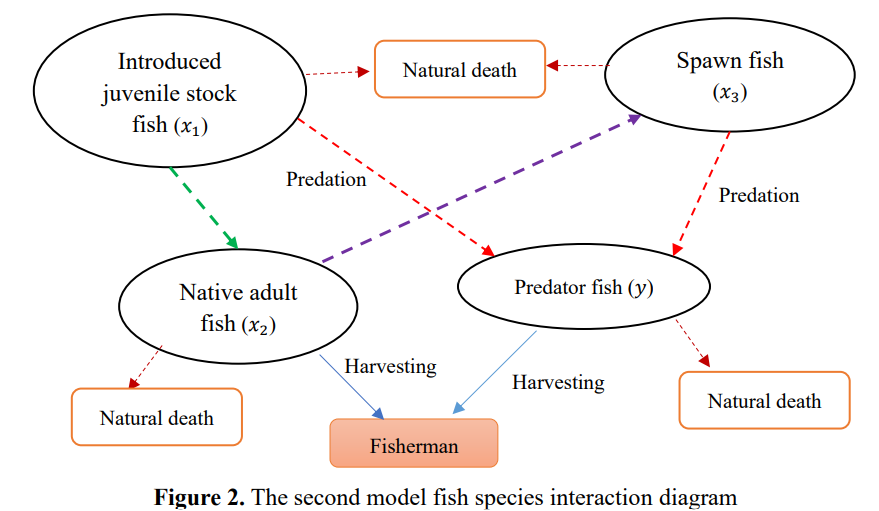




A research collaboration by Choirul Basir from the Doctoral Program of Mathematics, Universitas Padjadjaran, Indonesia, together with Asep K. Supriatna and Sukono from the Department of Mathematics, Universitas Padjadjaran, Indonesia, and Jumadil Saputra from the Department of Economics, Universiti Malaysia Terengganu, Malaysia, has developed and analyzed numerical simulations for mathematical models of inland fisheries.
The problem addressed is that inland fisheries are vital sources of food security and livelihoods, yet they face significant challenges from overexploitation, environmental change, and poor management practices. Understanding the population dynamics of fish under various ecological and human pressures is essential for designing sustainable harvesting strategies.
To address this, the researchers constructed and simulated mathematical models that capture the growth, interaction, and harvesting of fish populations in inland waters. Using numerical methods, the study explores how different parameters—such as harvesting intensity and environmental capacity—affect fish population sustainability and long-term yields.
The study concludes that effective management of harvesting levels and ecological conditions is critical to sustaining inland fisheries. The models provide valuable tools for policymakers and fisheries managers to predict outcomes and design strategies that balance economic needs with ecological preservation.
This research contributes to multiple United Nations Sustainable Development Goals (SDGs):
- SDG 2 (Zero Hunger): by supporting sustainable fisheries that provide food security.
- SDG 14 (Life Below Water): by offering mathematical insights into conserving aquatic biodiversity in inland waters.
- SDG 13 (Climate Action): by modeling ecological resilience under changing environmental conditions.
- SDG 17 (Partnerships for the Goals): through collaboration between Indonesian and Malaysian institutions.
Overall, this study demonstrates how mathematical modeling and numerical simulations can guide sustainable management of inland fisheries, contributing to ecological balance, economic resilience, and food security.
16_Mat_2025