

Researchers Document 23 Usnea Lichen Species in Cisanti Forest, West Java
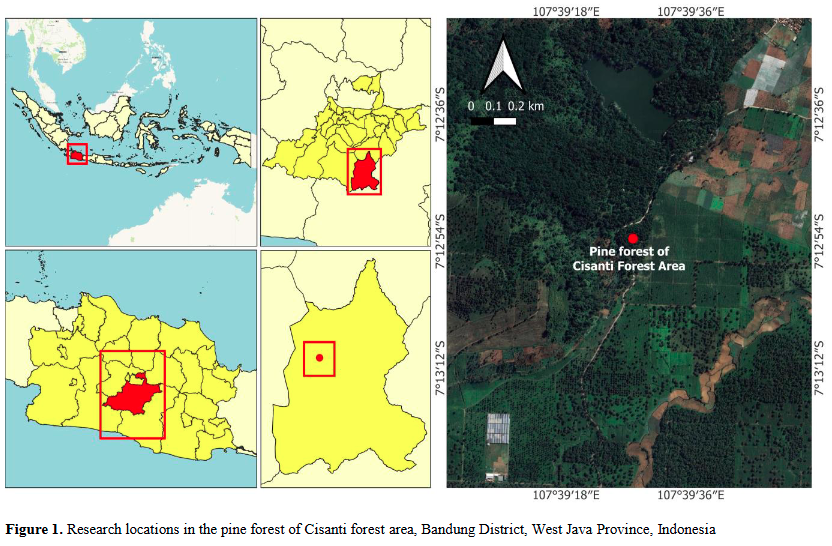

A team of biologists from Universitas Padjadjaran has uncovered remarkable lichen diversity in the Cisanti pine forest, a vital ecosystem at the headwaters of the Citarum River in Bandung District, West Java. Their study, published in Biodiversitas, identified 23 species of the lichen genus Usnea, many of which are valued for their ecological roles and pharmacological potential.
Summary of the Paper
The researchers collected Usnea specimens growing on pine trees and analyzed them using morphological, anatomical, and chemical characteristics. Advanced phenetic analysis grouped the 23 species into three clusters corresponding to recognized subgenera: Usnea, Eumitria, and Dolichousnea.
Notable findings included close relationships between species pairs such as U. sinensis and U. maculata, while the most distant relationships were observed between U. baileyi and U. barbata. Chemical tests confirmed the widespread presence of usnic acid, a compound known for antimicrobial, anti-inflammatory, and anticancer properties.
Why It Matters
The discovery of such high Usnea diversity in Cisanti highlights the forest’s role as a biodiversity hotspot. Usnea lichens are more than just ecological indicators of clean air and healthy forests—they also produce bioactive compounds with applications in medicine, cosmetics, and nutraceuticals. For example, barbatic acid and usnic acid are being studied as potential anticancer and antimicrobial agents.
Conserving Cisanti’s forest is therefore not only crucial for maintaining water security in the Citarum River basin but also for safeguarding natural resources with biotechnological and pharmaceutical potential.
Connection to the Sustainable Development Goals
This research directly supports SDG 15: Life on Land, which calls for halting biodiversity loss and protecting ecosystems. By documenting lichen diversity and revealing their medicinal potential, the study strengthens the case for preserving Cisanti’s forest amid pressures from tourism development, land-use change, and pollution.
Looking Ahead
The authors emphasize the need for further studies integrating molecular data with morphological and chemical analysis to refine Usnea taxonomy and explore new species. They also recommend sustainable eco-agrotourism policies that balance Cisanti’s role as both a conservation area and a tourism destination.
As the headwaters of the Citarum supply three major reservoirs—Saguling, Cirata, and Jatiluhur—the protection of Cisanti’s biodiversity carries implications for ecology, human health, and water management. The study thus reinforces the interconnectedness of natural resource conservation, scientific research, and sustainable development.
DOI: https://doi.org/10.13057/biodiv/d260207
13/Bio/2025