

Reviving a River, Transforming Lives: The Citarum Living Lab Story
In the heart of West Java, Indonesia, the Citarum River, once a vital source of life, now faces a severe pollution crisis. But a groundbreaking project is turning the tide, showing how collaboration and innovation can restore not just an ecosystem, but the health and prosperity of the communities that depend on it.
This is the story of the Citarum Living Lab—a real-world experiment where researchers, government officials, and local villagers are working hand-in-hand to co-create a sustainable future.
A River in Crisis, A Community at Risk
For over 25 million people, the Citarum River is essential for water, energy, and livelihoods. However, rapid urbanization, inadequate waste management, and industrial pollution have degraded it into one of the world’s most polluted rivers. This environmental crisis directly threatens human health, leading to water-borne diseases and harming local economies.
Traditional top-down solutions have struggled to create lasting change. The Citarum Living Lab was born from a simple yet powerful idea: what if the people most affected by the problem were central to designing the solution?
What is a “Living Lab”?
A Living Lab isn’t a traditional laboratory with test tubes and white coats. It’s an innovative approach where real communities become testing grounds for new ideas. Researchers, engineers, designers, and social scientists work directly with residents to:
- Co-create: Listen to community needs and brainstorm solutions together.
- Explore: Design pilot projects for better waste and water management.
- Experiment: Build and test these solutions in the real world.
- Evaluate: Learn, adapt, and improve based on what works.
Connecting to Global Goals: The SDGs in Action
The Citarum Living Lab is a live demonstration of how local action can drive global progress, directly contributing to multiple UN Sustainable Development Goals (SDGs):
- SDG 3: Good Health and Well-being: By cleaning the river and improving sanitation, the project directly reduces exposure to pollutants and water-borne diseases, safeguarding community health.
- SDG 11: Sustainable Cities and Communities: The lab focuses on revitalizing peri-urban villages, making them more resilient, sustainable, and livable through better infrastructure and community-led planning.
- SDG 12: Responsible Consumption and Production: A core pillar is creating a “circular economy” for waste. Instead of trash polluting the river, plastic and organic waste are recovered and turned into valuable new products, fostering local entrepreneurship.
- SDG 17: Partnerships for the Goals: This is the engine of the entire project. The lab brings together an international consortium of universities, all levels of the Indonesian government, NGOs, and local community leaders, proving that complex challenges require united action.
The Path Forward: A Model for the World
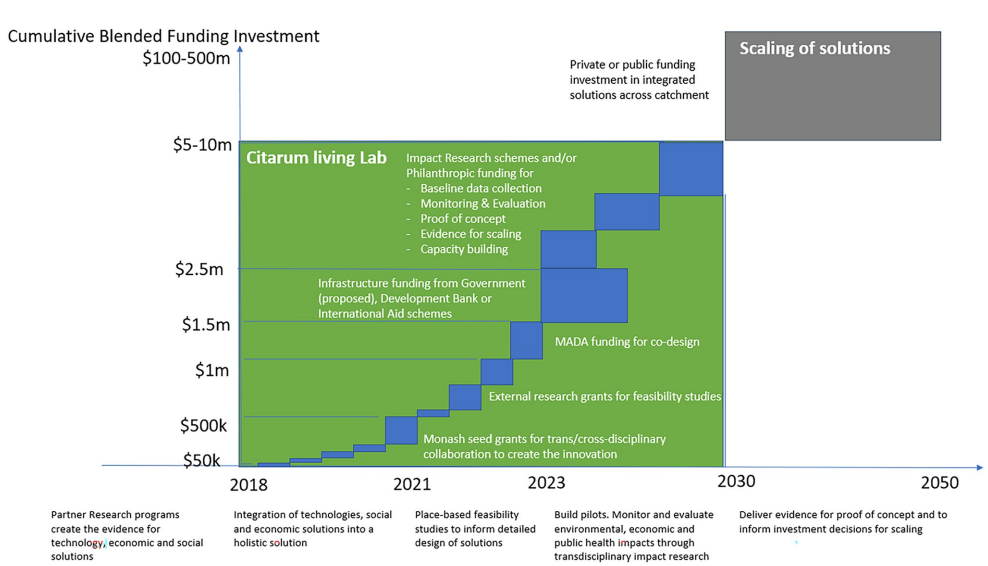
The journey hasn’t been easy. The team navigated funding challenges, language barriers, and the need to translate complex ideas into practical, on-the-ground actions. Key to their success has been building trust through years of dialogue and ensuring that local knowledge and priorities guide every step.
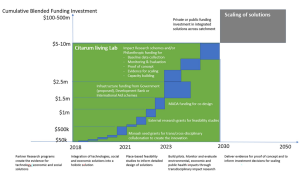
The project has already achieved significant milestones, including a co-designed 50-year Masterplan for river revitalization endorsed by the West Java Governor and the development of a community-led waste processing facility.
The Citarum Living Lab proves that a healthier planet and healthier people are two sides of the same coin. By empowering communities and fostering unprecedented collaboration, it offers a beacon of hope—not just for the Citarum River, but for vulnerable watersheds and communities around the world.
Source: Hadfield, P. et al. (2024) Citarum Living Lab: Co-creating visions for sustainable river revitalisation. PLOS Water. https://journals.plos.org/water/article?id=10.1371/journal.pwat.0000200
05/Geo/2025