

“Small but Healthy”: What Baduy Children Teach Us About Growth and Survival
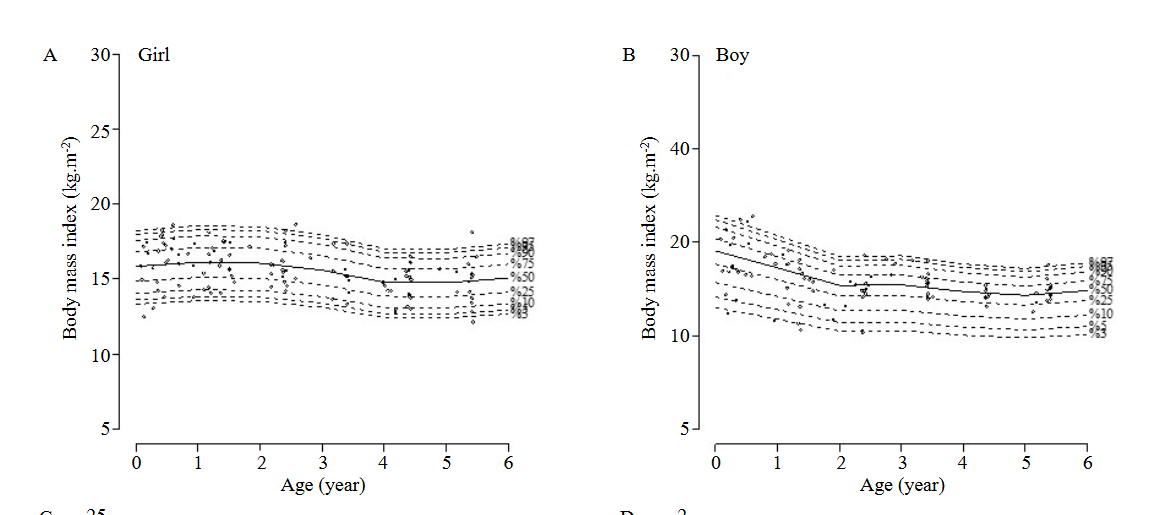


Does a small body always mean malnutrition? A recent study published in the HAYATI Journal of Biosciences says otherwise. The article “Life History and Growth Patterns of Baduy Children” reveals that Baduy children grow with smaller body sizes compared to national standards, yet most of them remain in good nutritional status.
This research is a collaboration across disciplines and universities. The team includes Eneng Nunuz Rohmatullayaly, Shelvie Raffiza Nasihin, and Kharisma Nurinsani Maulidinda (Department of Biology, Universitas Padjadjaran), Sinta Septi Pangastuti (Department of Statistics, Universitas Padjadjaran), and Tetri Widiyani (Department of Biology, Universitas Sebelas Maret).
Drawing on anthropometric data from 215 Baduy children aged 0–5 years across 24 hamlets, the researchers applied Generalized Additive Models for Location, Scale, and Shape (GAMLSS) to trace growth patterns. The findings show that while Baduy children are generally shorter and lighter than the Indonesian National Synthetic Growth Charts (INSGC), more than 80% maintain a good nutritional status. This supports the “small but healthy” hypothesis: that smaller bodies can be an advantageous evolutionary strategy, conserving energy and optimizing growth potential in challenging biocultural environments.
The study also resonates with the Sustainable Development Goals (SDGs):
- SDG 2 (Zero Hunger): deepening understanding of child nutrition in indigenous communities.
- SDG 3 (Good Health and Well-Being): providing scientific insights to support child health in resource-limited settings.
- SDG 10 (Reduced Inequalities): emphasizing the need for inclusive policies that recognize indigenous populations.
In short, being small does not always mean being unhealthy. The growth patterns of Baduy children remind us that human adaptation is diverse and deeply intertwined with culture and environment.
Source: https://www.scopus.com/record/display.url?eid=2-s2.0-85211181399&origin=resultslist
09/Stat/2025