

Smart Magnetic Nanoparticles: How DNA Interaction Can Boost Future Biomedical Applications
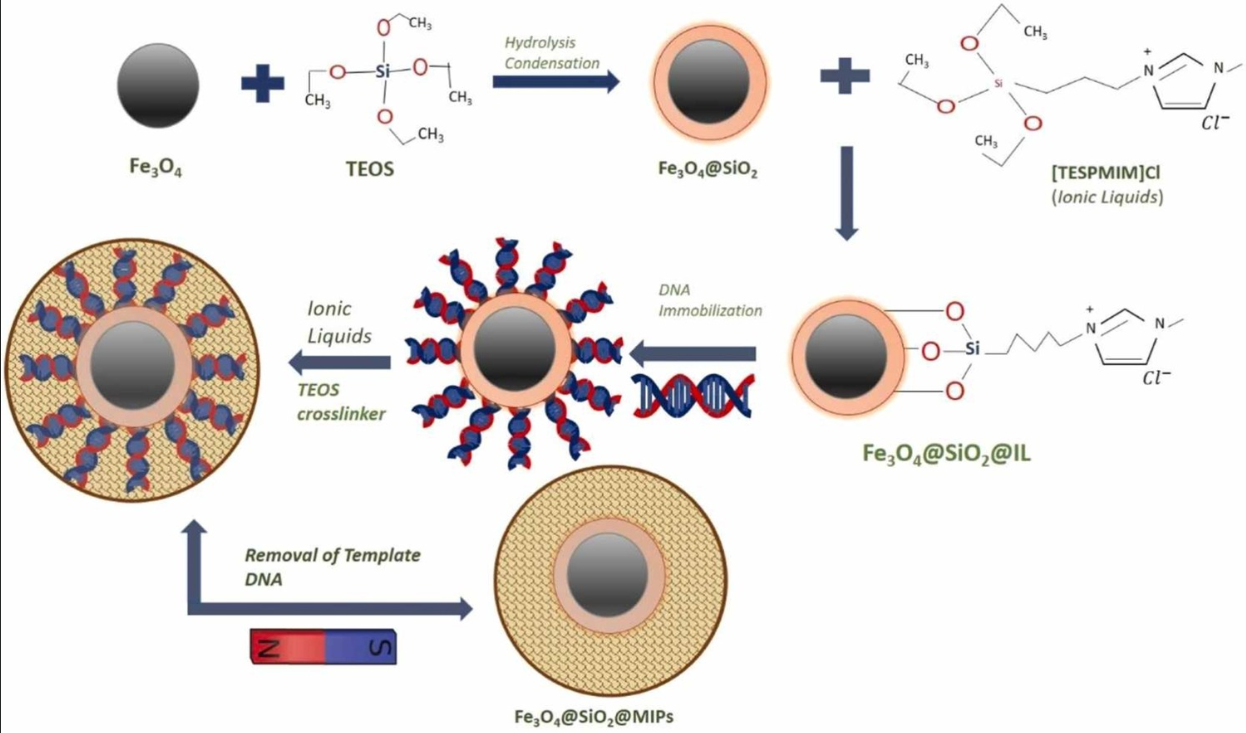

A team of researchers from Unpad has explored how DNA interacts with specially coated magnetic nanoparticles, opening new possibilities for faster and more accurate biomedical technologies. The study focused on SiO2-coated Fe3O4 nanoparticles (SiO2@Fe3O4) and revealed how their magnetic behavior changes when combined with DNA molecules.
Magnetic nanoparticles (mNPs) are already known for their potential in biomedical applications such as DNA detection, purification, and even targeted therapies. What makes this research unique is the use of X-ray magnetic circular dichroism (XMCD), a powerful synchrotron-based technique, to understand the spin and orbital properties of these nanoparticles at the microscopic level.
The findings show that coating Fe3O4 nanoparticles with SiO2 not only improves their structure and stability but also enhances their ability to adsorb DNA. The thicker the coating, the better the adsorption effect. This makes the nanoparticles more efficient in processes like DNA separation, which could eventually simplify complex biomedical procedures.
The study also highlights the spin-selectivity effect, where Fe2+ ions play a stronger role than Fe3+ ions in the magnetic response. This property could make the separation and detection of DNA more precise, paving the way for innovative diagnostic and therapeutic tools.
This breakthrough aligns with the United Nations Sustainable Development Goals (SDGs), particularly SDG 3: Good Health and Well-being. By advancing technologies that can lead to faster disease detection and more effective treatments, such research contributes directly to global efforts in improving healthcare accessibility and outcomes.
In conclusion, the research provides strong evidence that nanotechnology and magnetism—when combined with biomolecules like DNA—could reshape the future of medical diagnostics and treatments.
Source: https://www.scopus.com/pages/publications/85214295136
20/Fis/2025