

Smarter Biosensors: A New Era of Infectious Disease Detection
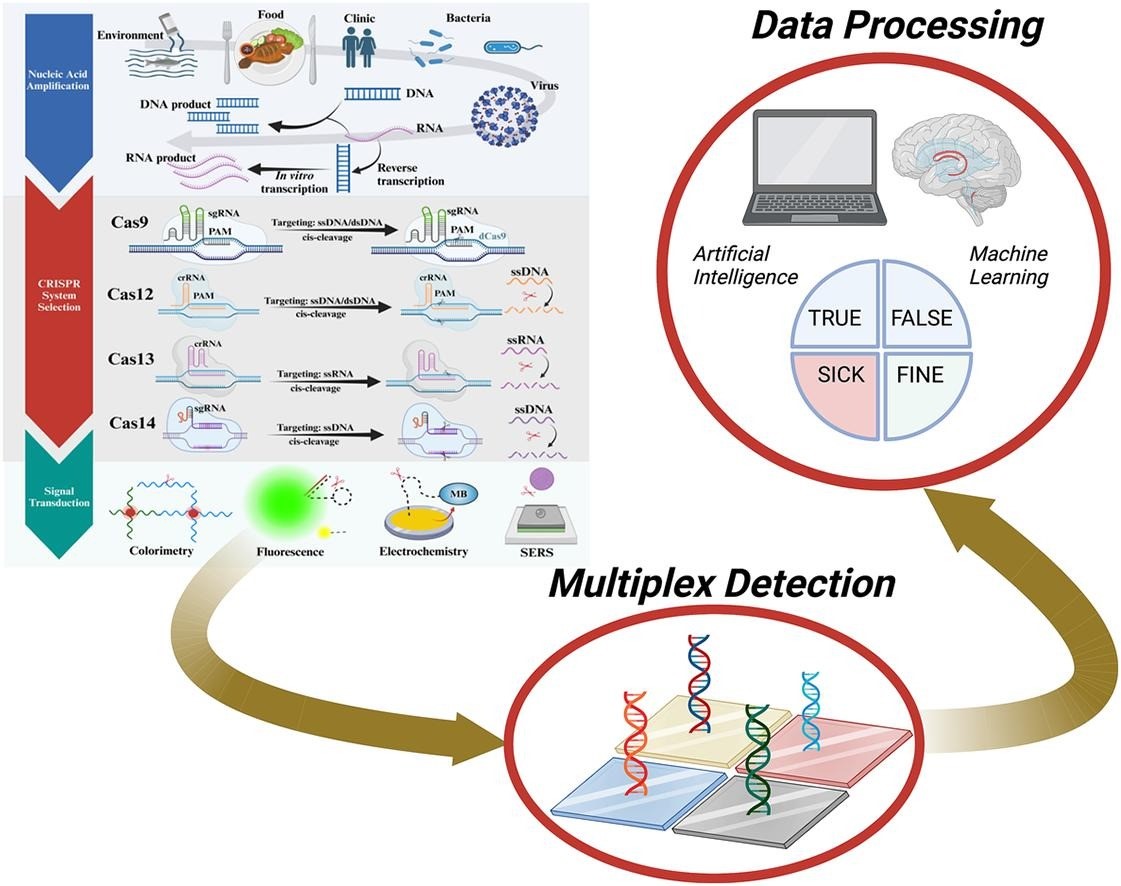

Infectious diseases caused by viruses, bacteria, fungi, and parasites remain a major challenge for global health. The COVID-19 pandemic proved how critical early and accurate detection is in preventing widespread transmission and saving lives. However, many traditional diagnostic methods are still limited—often expensive, time-consuming, and requiring complex equipment.
To address these challenges, researchers are now combining nanotechnology, artificial intelligence (AI), and CRISPR technology to create the next generation of smart biosensors. These advanced tools promise faster, more accurate, and more accessible disease detection, even in point-of-care (POC) settings such as clinics, rural areas, or during outbreaks.
CRISPR, originally discovered as part of the immune system of microorganisms, has become famous as a gene-editing tool. But its highly specific mechanism also makes it a powerful method for detecting pathogens. When integrated with nanotechnology, CRISPR-based biosensors can identify infectious agents with high sensitivity, while AI helps in processing data efficiently and enabling real-time sharing.
These smart biosensors could meet the ASSURED criteria—Affordable, Sensitive, Specific, User-friendly, Rapid and robust, Equipment-free, and Deliverable to end-users. This is especially important in fighting global health threats where timely diagnosis can mean the difference between containment and outbreak.
This innovation strongly supports Sustainable Development Goal (SDG) 3: Good Health and Well-being, which emphasizes improving global healthcare systems and ensuring access to safe, effective, and affordable medical technologies. With the integration of CRISPR, nanotechnology, and AI, the future of infectious disease diagnostics looks faster, smarter, and more reliable—bringing us closer to a world better prepared against future pandemics.
#UnpadResearch #CRISPR #GoodHealth
Link to the paper: https://www.sciencedirect.com/science/article/abs/pii/S0026265X24026900
34/Kim/2025