

Smarter Patient Grouping Could Save Lives: New Clustering Model for Heart Disease Risk

Heart disease remains the leading cause of non-communicable disease deaths worldwide, claiming around 17.9 million lives every year. To help tackle this global health challenge, researchers have developed a new model-based clustering approach that can group heart disease patients based on their specific risk factors.
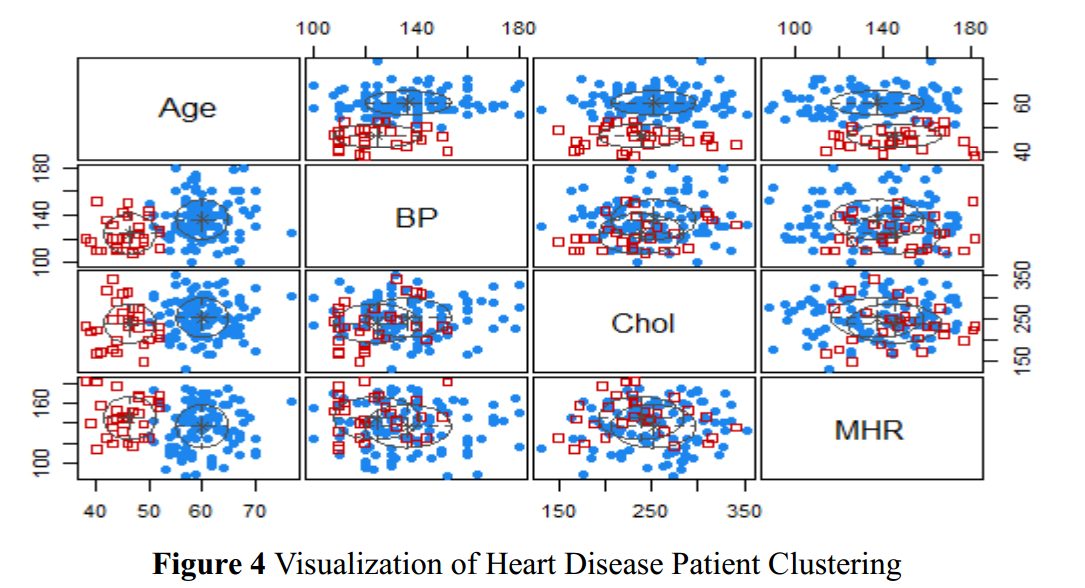
The study analyzed key health indicators such as age, blood pressure, cholesterol, and maximum heart rate. Unlike traditional methods, this approach uses finite mixture models, allowing patients to be grouped into clusters even when data shows uncertainty or overlaps. By applying the Expectation Maximization (EM) algorithm and using the Bayesian Information Criterion (BIC) for accuracy, the researchers identified two distinct patient clusters:
- Cluster 1 (103 patients): Higher risk due to older age, high blood pressure, and high cholesterol.
- Cluster 2 (29 patients): Risk linked to abnormal maximum heart rate.
This method not only improves the accuracy of patient grouping but also provides doctors with better insights for personalized treatment and prevention strategies.
The findings strongly support the goals of the United Nations Sustainable Development Goal (SDG) 3: Good Health and Well-being, which emphasizes reducing premature deaths from non-communicable diseases through prevention, treatment, and improved healthcare services.
By identifying patient groups more precisely, this model-based clustering approach could help health professionals design targeted interventions, ultimately saving lives and reducing the burden of heart disease worldwide.
Source: https://www.scopus.com/record/display.url?eid=2-s2.0-86000071072&origin=resultslist
24/Stat/2025