

Smarter Rainfall Predictions for a Resilient Future: Combining Statistics and AI for Sustainable Development
Accurate rainfall prediction is essential for managing water resources, supporting agriculture, and preparing for climate-related risks. A new study by researchers in West Java introduces a breakthrough approach that combines traditional statistical models with cutting-edge artificial intelligence to deliver more reliable forecasts.
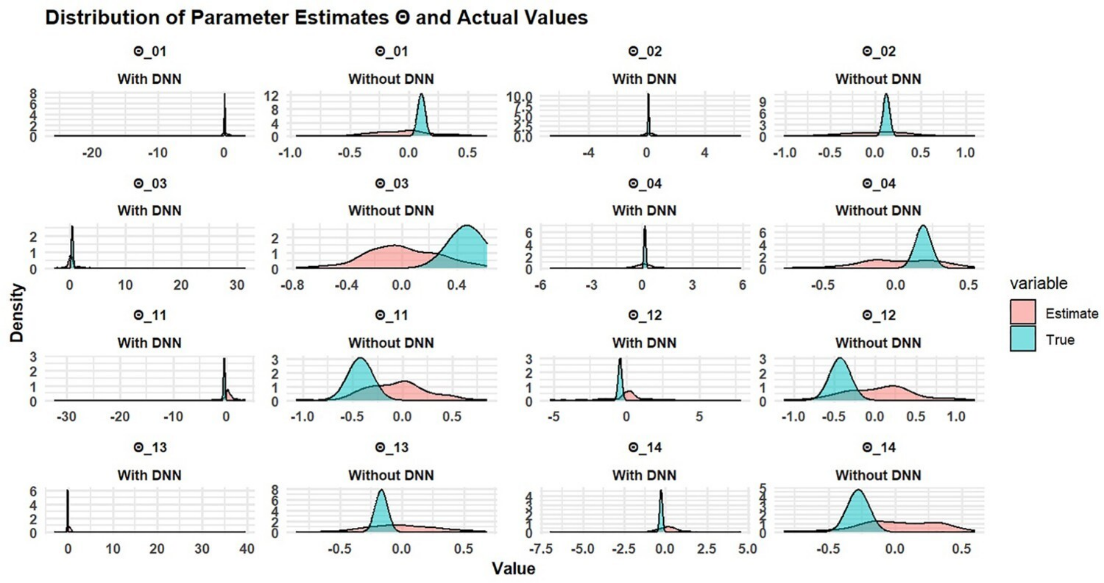
The study focuses on integrating the GSTARIMA (Generalized Space–Time Autoregressive Integrated Moving Average) model, widely used to analyze time series and spatial data, with Deep Neural Networks (DNN). The researchers proved that even after applying DNN to improve predictions, the model’s parameter estimates remain unbiased and robust. This means the forecasts stay accurate without introducing systematic errors—a crucial factor in weather and climate modelling.
Testing the model in four regions of West Java—Tasikmalaya, Garut, Cirebon, and Majalengka—revealed that DNN integration works especially well in areas with more complex rainfall patterns. While Tasikmalaya and Garut showed smaller deviations, the AI-powered model brought significant improvements for Cirebon and Majalengka, where rainfall patterns are more unpredictable.
This innovative approach holds promise not only for rainfall prediction but also for wider applications in hydrology, agriculture, and climate resilience planning. Farmers, water managers, and policymakers can benefit from these insights to make better decisions for crop planning, irrigation, and disaster preparedness.
The research aligns with the Sustainable Development Goals (SDGs), particularly:
- SDG 13: Climate Action, by providing tools that enhance climate prediction and adaptation strategies.
- SDG 2: Zero Hunger, as better rainfall forecasting supports sustainable agriculture and helps secure food supplies.
Looking ahead, the team suggests expanding this approach with other machine learning techniques, paving the way for even more powerful and adaptable forecasting models. With smarter rainfall predictions, communities can strengthen resilience against climate change and ensure sustainable management of vital resources.
Source: https://www.scopus.com/pages/publications/105006580671
02/Ilkom/2025