

Study Compares Mini Trawl and Lift Net Fisheries in Jakarta Bay
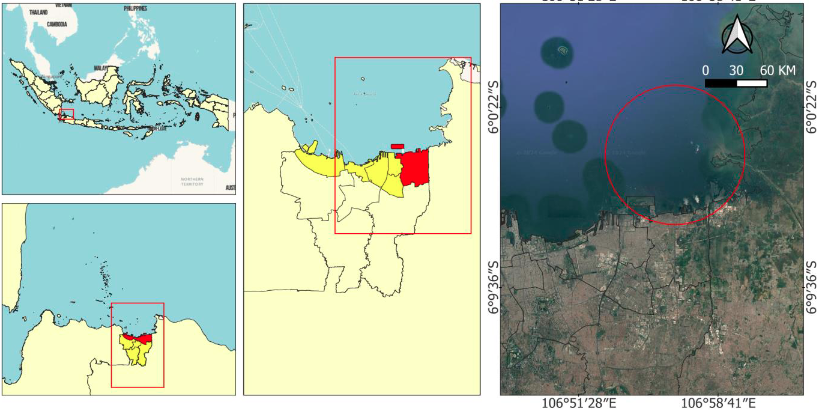
A new study published in Biodiversitas has revealed striking differences between two widely used fishing gears in Cilincing, Jakarta Bay: the mini trawl (arad) and the lift net (bagan). While arad remains technically banned under Indonesian law due to its destructive potential, it is still widely used because of its high catch volume.
Summary of the Paper
Researchers collected fish samples and interviewed 45 fishers between January and June 2024 to compare catch diversity, size, and economic value from both fishing gears.
Findings show that arad caught more species (28) from 25 families, including reef and demersal fish, while bagan caught 18 species from 13 families, dominated by pelagic species. Arad also caught a broader range of non-finfish (jellyfish, crabs, squid, shrimps, scallops), while bagan caught fewer groups.
However, most fish caught by both gears were below their Length of First Maturity (LM), raising concerns about overfishing of juvenile stocks. Economically, the majority of species caught were categorized as main catch with high market value, though both gears also captured bycatch and discards. According to IUCN data, most species fall under the Least Concern category, though continuous pressure could shift stock stability in the future.
Why It Matters
Indonesia is the world’s second-largest fish producer, and Jakarta Bay remains a vital fishing ground. The study highlights that while arad provides high species diversity and catch volume, it is non-selective and ecologically risky, threatening benthic habitats and long-term stock sustainability. Conversely, bagan is less destructive but captures a narrower range of species.
These findings underline the policy dilemma: balancing fisher livelihoods with ecosystem sustainability. Many Cilincing fishers depend on arad due to its efficiency, despite the ban. Without alternative gear improvements or economic incentives, enforcement alone may not solve the problem.
Connection to the Sustainable Development Goals
This research connects to SDG 14: Life Below Water, which calls for ending destructive fishing practices and ensuring sustainable fisheries. By documenting species diversity, catch composition, and maturity size, the study provides critical data for evidence-based fisheries management.
Looking Ahead
The authors stress the need for gear modification and selectivity improvements to reduce juvenile and non-target catch. They also call for continued monitoring of arad’s ecological impacts and more community-based solutions that involve fishers in sustainable practices.
As Jakarta Bay continues to supply fish for local and national markets, ensuring sustainable capture is key not just for biodiversity, but also for the food security and livelihoods of thousands of coastal households.
DOI: https://doi.org/10.13057/biodiv/d260127
16/Bio/2025