

Study Finds “Small but Healthy” Growth Pattern in Baduy Children
A new study published in Hayati Journal of Biosciences sheds light on the growth patterns of children from the Baduy, an indigenous community in Banten Province, Indonesia. The research reveals that although Baduy children tend to be smaller in size compared to national standards, most maintain good nutritional status—supporting the “small but healthy” hypothesis.
Summary of the Paper
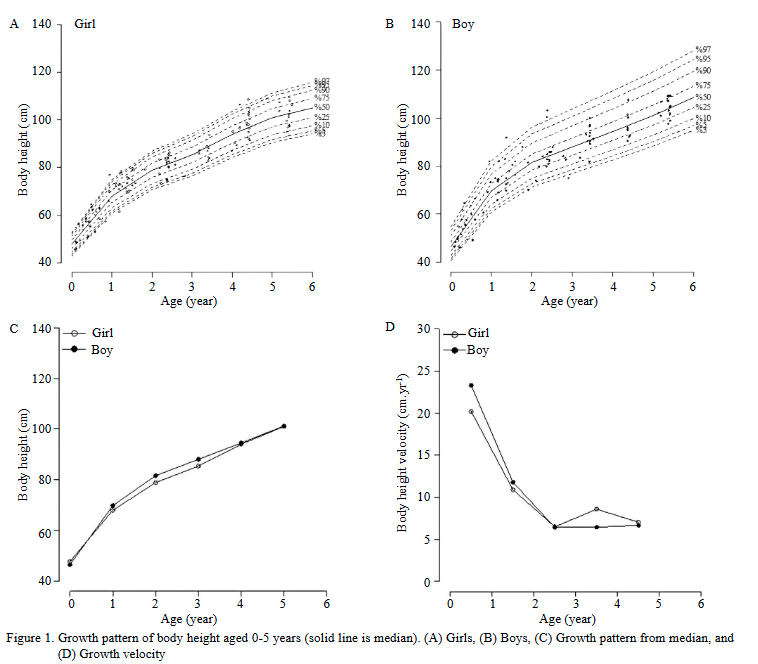
Researchers examined 215 children aged 0–5 years from 24 hamlets in Baduy Luar. Using anthropometric measurements—body height, body weight, head circumference, and body mass index (BMI)—the team tracked growth patterns against the Indonesian National Synthetic Growth Charts (INSGC).
The study found that Baduy children experience a decline in growth rate after birth until around age three, followed by steady annual increases. By age five, their average body size remains below Indonesian norms: slightly shorter and slimmer. However, over 80% of children were categorized as having normal nutritional status, and only a small percentage were wasted or overweight. These findings suggest that small body size in the Baduy is not necessarily a sign of poor health, but rather an adaptive response to biocultural conditions such as high physical activity, limited resources, and traditional subsistence farming.
Why It Matters
Stunting is often interpreted as a public health issue linked to malnutrition. Yet, the study emphasizes that smaller body size can also represent an evolutionary life history strategy that favors energy efficiency. For the Baduy, this adaptation balances the demands of skeletal and brain growth with survival in a resource-limited environment.
By situating the findings within life history theory, the research highlights trade-offs in growth: energy is prioritized for brain development and essential functions over rapid body growth. This perspective challenges the view that all short stature in children must be considered pathological, instead acknowledging cultural and ecological contexts.
Link to the Sustainable Development Goals
The findings align with SDG 3: Good Health and Well-being, which emphasizes ensuring healthy lives and promoting well-being for all. By showing that indigenous growth patterns can reflect healthy adaptation rather than malnutrition, the study underscores the importance of culturally sensitive health assessments. Policies that equate smaller body size solely with poor health risk misrepresenting the well-being of indigenous populations like the Baduy.
Looking Ahead
The authors recommend continued research on indigenous communities, noting that biocultural factors—such as diet, physical activity, and cultural practices—play crucial roles in shaping growth. Recognizing these adaptations may help refine child health standards in Indonesia and beyond, ensuring they better reflect diverse human growth trajectories.
Ultimately, the study highlights how the Baduy community’s “small but healthy” children remind us that human growth is not one-size-fits-all, but a complex interplay of biology, culture, and environment.
DOI: https://doi.org/10.4308/hjb.32.1.185-195
17/Bio/2025