

Tiny Bubbles, Big Impact: Nanobubble Flotation Brings Hope for Clean Water Solutions
Access to clean water is becoming one of the most pressing challenges of our time. With only 2.7% of the Earth’s water being freshwater, and less than 0.3% directly usable by humans, the world is heading toward a future where water scarcity could affect three-quarters of the global population by 2050.
To tackle this crisis, researchers are turning to an innovative technology: nanobubble flotation for seawater treatment. A recent critical review highlights how this method can enhance desalination—the process of removing salt and impurities from seawater—making it more efficient, eco-friendly, and sustainable.
How Nanobubbles Work
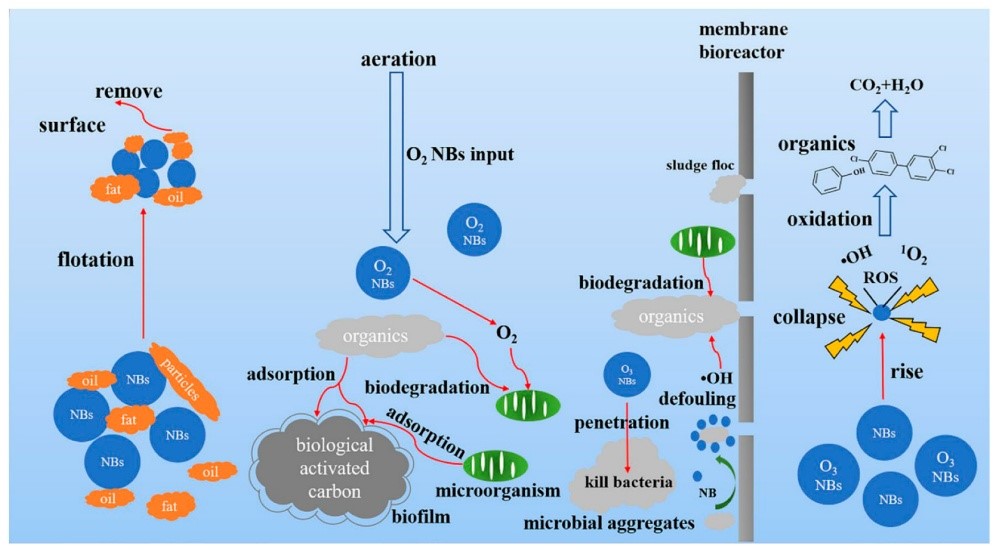
Unlike regular bubbles, nanobubbles are extremely tiny gas bubbles with unique properties. They can stay stable in water longer, carry electrical charges on their surfaces, and even release free radicals that help break down pollutants. When used in seawater treatment, these nanobubbles attach to salt ions and suspended solids, lifting them out of the water in a process known as ion flotation.
This advanced method improves water purification by:
- Enhancing separation efficiency: Nanobubbles boost the process of collisions, attachments, and detachments, making desalination faster and more effective.
- Reducing chemical use: Traditional desalination requires large amounts of chemicals, but nanobubbles minimize this need, lowering costs and environmental impacts.
- Supporting diverse applications: Depending on the type of gas used—such as oxygen, nitrogen, or ozone—nanobubbles can also improve waste treatment, food processing, and even renewable energy efficiency.
A Step Toward SDG 6: Clean Water and Sanitation
This breakthrough aligns directly with the United Nations Sustainable Development Goal (SDG) 6, which calls for ensuring access to safe water and sanitation for all. With over 19,000 desalination plants worldwide already producing more than 100 million cubic meters of freshwater daily, technologies like nanobubble flotation could help make desalination more sustainable and accessible for communities in need.
Looking Ahead
As global demand for clean water continues to rise, nanobubble flotation offers a promising solution. By making desalination more efficient and environmentally friendly, this tiny-bubble technology could play a big role in securing the world’s water future.
Source: https://www.scopus.com/record/display.url?eid=2-s2.0-105002398190&origin=resultslist