

Unpad Researchers Study Rice Crisis Dynamics in Southeast Asia
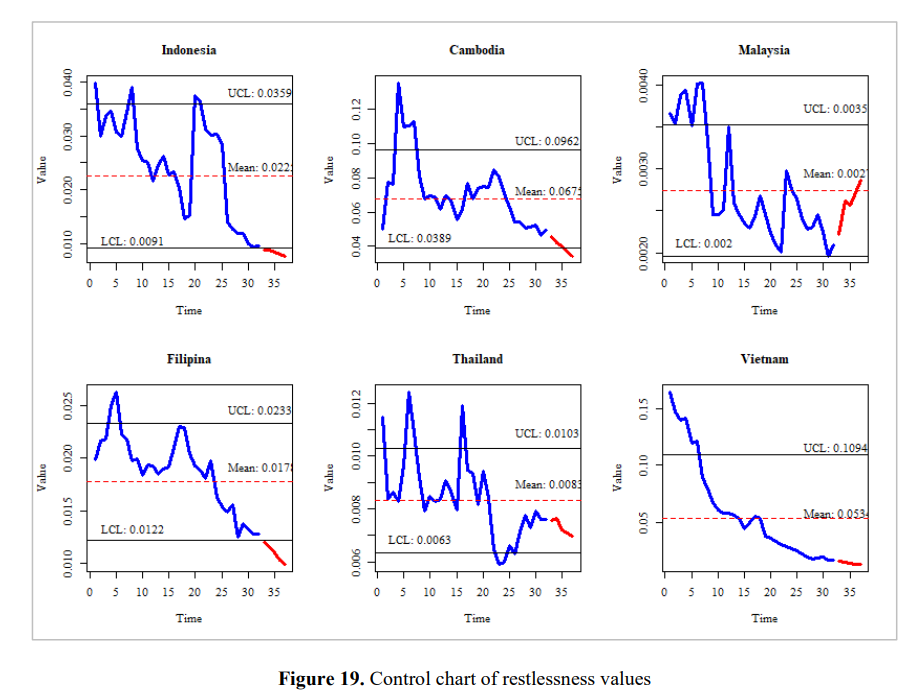
A research team from the Department of Statistics, Universitas Padjadjaran, has successfully published their latest study in the reputable international journal Organic Farming (Volume 11, Issue 1, 2025). The article, titled “Forecasting Rice Crisis Dynamics in Southeast Asia Using a Spatio-Temporal Autoregressive Model Based on the Restlessness Indicator” by Hidayat et al. highlights the looming threat of a rice crisis in Southeast Asia and presents a statistical modeling approach for mitigation.
The study explains that the rice crisis poses a serious threat to food security and economic stability in the region, given that rice is the primary staple food for most of its population. Factors such as climate change, crop failures, and restrictive export policies—for example, India’s rice export ban in 2023—have triggered rising rice prices, which could potentially spark social unrest.
To address this issue, the researchers introduced the restlessness indicator as a predictive tool that incorporates key variables such as rice prices, consumption patterns, and per capita income. Using the Spatio-Temporal Autoregressive (STAR) model, they forecasted rice-related restlessness across six Southeast Asian countries—Indonesia, the Philippines, Thailand, Vietnam, Malaysia, and Cambodia—for the period 2024–2028.
The results show that the STAR (5,1) model performed best, with a relatively low forecasting error (MAPE of 15.1%). The main findings indicate that no country is expected to experience a severe rice crisis during this period, though potential unrest remains a concern.
This research is expected to provide valuable insights for policymakers and stakeholders in formulating preventive strategies to ensure sustainable food security, while also supporting the achievement of Sustainable Development Goal (SDG) 2: Zero Hunger.
Source: https://www.acadlore.com/article/OF/2025_11_1/of110102
15/Stat/2025