



In today’s fast-changing financial markets, managing risk is just as important as seeking profit. A new study introduces an advanced model for investment portfolio optimization that balances returns with risks by considering risk-free assets (like time deposits) and company liabilities.
A Step Beyond the Classic Portfolio Model
This research builds on Markowitz’s portfolio optimization model, which is widely used to balance risk and return in investments. The new approach introduces two crucial factors:
- Risk-free assets, which reduce potential losses.
- Liabilities, which reflect a company’s real financial condition.
By using quadratic optimization with value-at-risk (VaR), the model helps investors make more accurate and reliable decisions when managing portfolios.
Application in Indonesia’s Mining and Energy Sector
The study tested this model on 11 stock assets in Indonesia’s mining and energy sector. Results showed:
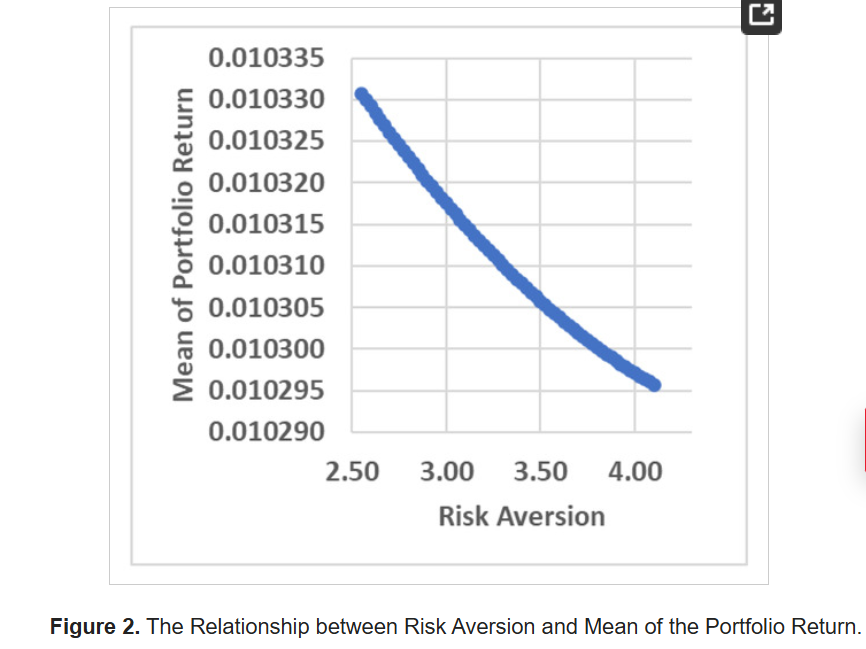
- Risk aversion has a negative correlation with both expected returns and VaR. This means the more cautious an investor is, the smaller the potential return (and risk) becomes.
- With a risk aversion range of 5.1% to 8.2%, the expected monthly portfolio return ranged between 0.0102964 and 0.0103316, while VaR ranged between 0.0137975 and 0.0138270.
- Compared to previous models, the proposed method achieved better accuracy in predicting portfolio returns.
The model is practical too—it can be calculated using commonly available software such as Microsoft Excel or Matlab.
Why This Matters
For investors, especially in volatile industries like mining and energy, this model provides a reliable tool to manage risk while aiming for steady growth. It ensures that investment decisions are based not just on profit potential, but also on a company’s ability to handle its liabilities.
Connection to the SDGs
This innovation supports several United Nations Sustainable Development Goals (SDGs):
- SDG 8: Decent Work and Economic Growth – by strengthening financial decision-making that promotes sustainable business growth.
- SDG 9: Industry, Innovation, and Infrastructure – through the development of advanced, data-driven financial models.
- SDG 12: Responsible Consumption and Production – by encouraging responsible and risk-aware investment practices.
While the model shows promising results, it currently applies only to single-period investments. The researchers recommend extending it to multi-period models in future studies, which would better serve long-term investors. Even so, this approach marks an important step toward more sustainable and responsible financial strategies in Indonesia and beyond.
Source: https://www.mdpi.com/2079-3197/12/6/120
Mat-07/24