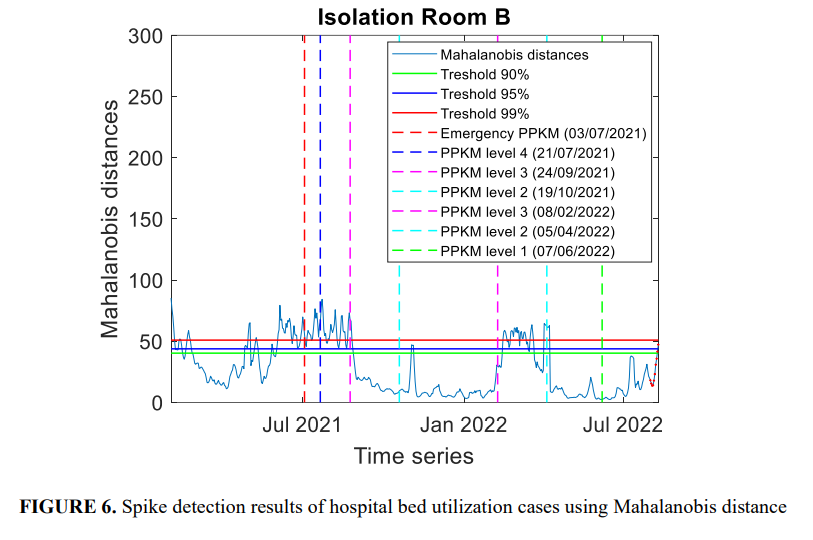

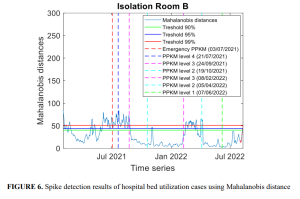
Researchers in Bandung have developed an innovative method to anticipate potential COVID-19 spikes using Gaussian Process Regression (GPR) combined with the Mahalanobis distance approach. This advanced analysis not only predicts the number of active cases, recoveries, and deaths but also serves as an early warning system when cases exceed safe thresholds.
The study also examined which districts in Bandung experienced the most significant increases in cases using a Pareto diagram. Importantly, hospital bed availability was included in the model, ensuring that predictions are connected with the city’s healthcare capacity.
The findings showed that these methods can accurately capture COVID-19 patterns and detect unusual spikes in cases. This means policymakers can respond more quickly—allocating resources, strengthening prevention efforts, and preparing hospitals before a surge happens.
This research directly supports the United Nations Sustainable Development Goals (SDGs), particularly:
- SDG 3 (Good Health and Well-being): by improving disease surveillance and pandemic preparedness.
- SDG 9 (Industry, Innovation, and Infrastructure): by applying cutting-edge technology and data science to strengthen healthcare systems.
As the world continues to face pandemic risks, this predictive approach offers valuable insights for designing smarter, more responsive public health strategies—not only in Bandung but also in other cities facing similar challenges.
Source: https://scik.org/index.php/cmbn/article/view/8579
Stat-06/24