



Protecting crops from pests has always been one of the toughest challenges for farmers. Pests not only cause economic losses but also reduce food production and harm the environment when chemical pesticides are overused. Now, researchers are bringing artificial intelligence (AI) into the field to tackle this age-old problem in a smarter, more sustainable way.
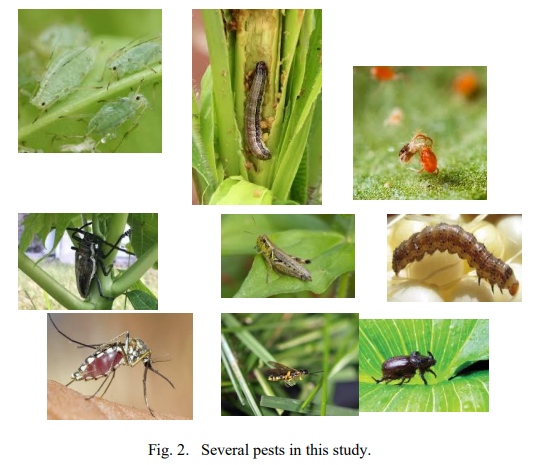
A recent study introduced a powerful pest detection system using a combination of SqueezeNet (a deep learning model) and Multi-Layer Perceptron (MLP). By analyzing more than 3,000 images of plant pests, the system achieved an impressive accuracy rate above 99%. This means it can correctly identify most pests and help farmers act quickly to protect their crops.
The research highlights four main steps in the process: image preprocessing, embedding features with SqueezeNet, classification with MLP, and thorough testing using cross-validation. While a few pests such as mites, sawflies, and stem borers were harder to classify due to varying image backgrounds, the overall results are highly promising.
Beyond accuracy, the benefits of this innovation are clear:
- Early detection of pests → saves crops before infestations spread.
- Reduced use of pesticides → lowers environmental impact and promotes healthier farming.
- Less labor needed → technology can monitor fields automatically.
- Boosted crop yields → healthier plants mean more food production.
This advancement strongly supports the United Nations Sustainable Development Goals (SDGs), particularly:
- SDG 2: Zero Hunger – ensuring sustainable food production systems and resilient agricultural practices.
- SDG 12: Responsible Consumption and Production – reducing excessive pesticide use and promoting eco-friendly farming.
- SDG 15: Life on Land – protecting ecosystems and reducing harmful impacts on biodiversity.
As AI continues to evolve, tools like this could transform farming into a more sustainable, efficient, and eco-friendly practice. Future research is expected to improve image segmentation, making pest detection even more accurate across diverse farming conditions.
With innovations like these, the fight against pests is moving from harmful chemicals to smart technology—paving the way for a greener, more food-secure future.
Source: https://thesai.org/Publications/ViewPaper?Volume=15&Issue=6&Code=IJACSA&SerialNo=80
TI-02/24