

Boosting Enzyme Production: Smart Protein Folding Strategy Supports Sustainable Biotech
A team of researchers has successfully improved the production of a powerful enzyme from Thermus thermophilus—a bacterium that thrives in extreme heat—by applying an innovative protein-folding strategy in Escherichia coli. This breakthrough could pave the way for more efficient biotechnological applications, supporting Sustainable Development Goal (SDG) 9: Industry, Innovation, and Infrastructure.
The enzyme, known as Tth DNA polymerase, is remarkable because it works both as a DNA polymerase and as a reverse transcriptase. These dual functions make it highly valuable for biotechnology and molecular biology, including applications in DNA amplification, genetic research, and medical diagnostics.
However, producing this enzyme in E. coli—a common host for protein expression—has been challenging. The rapid production of the enzyme often overwhelms the host’s folding machinery, leading to the formation of inclusion bodies, clumps of misfolded proteins that reduce the yield of functional enzyme.
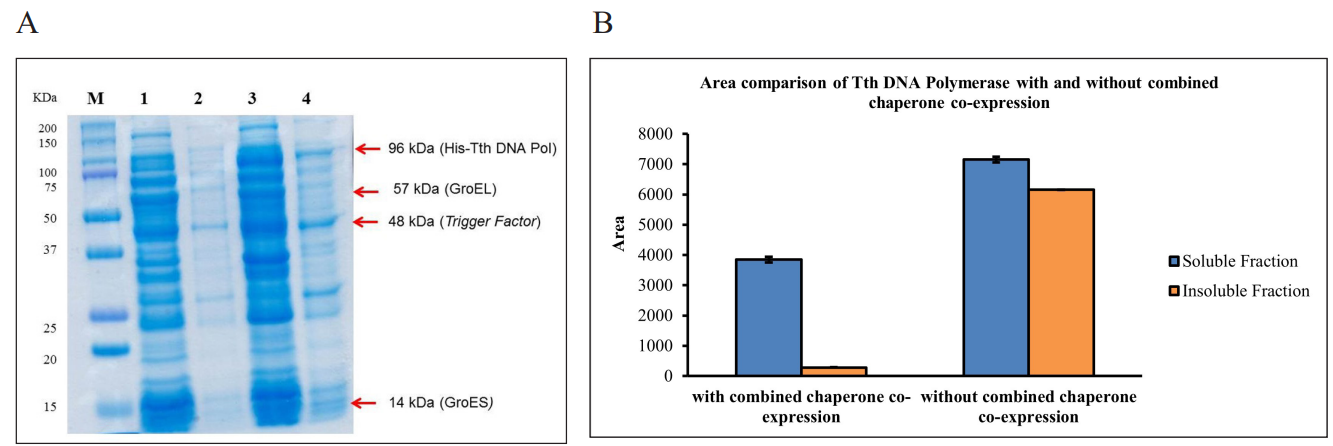
To tackle this issue, the researchers introduced a co-expression system using two molecular helpers, GroEL/ES and trigger factor chaperones, which assist proteins in folding correctly. The results were striking: co-expression not only reduced the formation of insoluble protein clumps but also significantly boosted the overall production of soluble enzyme, reaching 3.93 mg/ml of total protein.
“This finding demonstrates that supporting proteins with the right folding partners can dramatically improve enzyme recovery,” the researchers noted.
The study highlights the importance of biotechnological innovation in developing more sustainable and efficient production methods. By enabling higher yields of functional enzymes, this approach can reduce waste, lower costs, and expand access to enzymes essential for health, agriculture, and environmental research.
This research aligns with SDG 9, which emphasizes the role of innovation and technology in building resilient infrastructure and fostering sustainable industrial growth. Smarter protein engineering techniques like this could accelerate progress across multiple fields, from diagnostics to green biotechnology.
Source: https://japsonline.com/abstract.php?article_id=4347&sts=2
Kim-10/24