

Breakthrough in Chikungunya Detection: New Antibody Fragment Boosts Rapid and Accurate Diagnosis
Researchers have made a significant breakthrough in the fight against Chikungunya virus (CHIKV), a mosquito-borne disease that has caused outbreaks in Asia and beyond. A recent study successfully developed a single chain variable fragment (scFv) antibody that can detect the virus more efficiently, opening the door for rapid diagnostic tools that could save lives during epidemics.
Traditional methods often use monoclonal antibodies, which are costly and sometimes difficult to produce. The new approach uses scFv — a smaller antibody fragment that can serve the same purpose but is cheaper and easier to manufacture. However, producing scFv in bacteria like Escherichia coli has long been challenging because the proteins often misfold and lose functionality.
To overcome this, scientists co-expressed the scFv with three helper proteins, known as chaperones (GroEL, GroES, and Trigger Factor). These chaperones helped the scFv fold correctly, increasing the yield of usable antibody fragments by nearly five times compared to previous attempts.
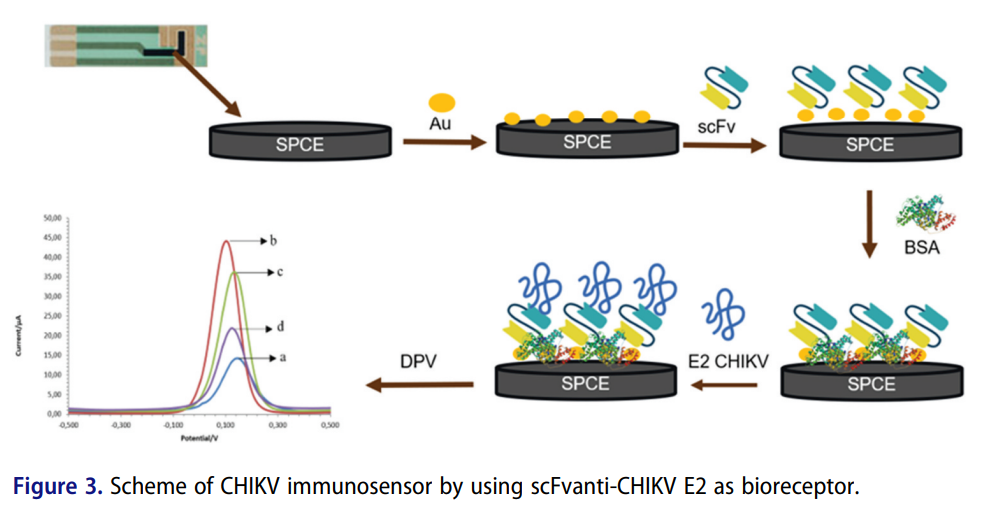
The research team also tested the scFv using an electrochemical immunosensor, a device that detects the presence of the virus’s E2 protein. The results showed remarkable sensitivity, with the system capable of detecting even trace amounts of the virus. This means the antibody fragment could be integrated into rapid diagnostic kits, enabling faster detection during outbreaks.
This innovation directly supports the United Nations Sustainable Development Goal (SDG) 3: Good Health and Well-Being, which emphasizes combating infectious diseases and strengthening health systems worldwide. Rapid and affordable diagnostic tools are crucial, especially in regions where healthcare resources are limited.
With this discovery, the scFv-anti-CHIKV-E2 has the potential to be used not only for Chikungunya detection but also as a model for developing similar tools for other infectious diseases. Faster, cheaper, and more reliable diagnostics bring us one step closer to reducing the impact of viral outbreaks on vulnerable communities.
Source: https://www.tandfonline.com/doi/full/10.1080/15321819.2024.2356639
Kim-12/24