

Cracking the Code of Landslides: New Soil Fracture Detection Supports SDGs on Resilient Cities


Landslides are one of the most dangerous natural disasters, often causing damage to infrastructure, the environment, and even human lives. A new study introduces a promising way to predict and prevent such disasters by identifying hidden fractures in soil before they turn into major hazards.
The research, titled “Identification of Soil Fracture Zone Using Waxman-Smits Model Based on ERT Survey Data,” focuses on landslide-prone areas where soil stability is at risk. Fractures in the ground often begin due to changes in the soil’s physical properties—such as porosity, permeability, and density—that weaken its ability to hold together.
To address this, researchers used Electrical Resistivity Tomography (ERT) combined with the Waxman-Smits model to analyze soil water saturation and stress levels. This advanced model is especially effective in correcting the influence of clay-rich soils, which often complicate traditional measurements.
Key Findings
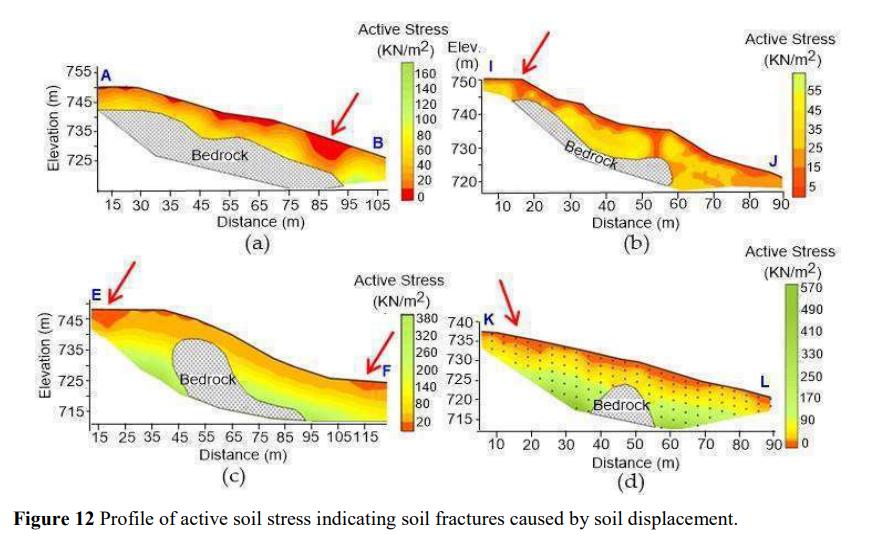
- Soil fractures correlate with low water saturation (5–15%) and low stress levels (< 15 kN/m²).
- Fractured soils, particularly clayey silt with high cation exchange capacity, are more vulnerable to collapse.
- Areas with strong contrasts in soil stress and water saturation values were found to be the most fracture-prone.
- Weathered breccia and tuff rock layers act as natural slip planes, making them highly susceptible to landslides once water infiltrates.
This means that by monitoring soil resistivity and water content, communities can detect early warning signs of landslides before they occur.
Linking to the SDGs
The study strongly supports Sustainable Development Goal (SDG) 11: Sustainable Cities and Communities by helping to reduce disaster risks in urban and rural areas. It also aligns with SDG 13: Climate Action, since climate change increases the intensity of rainfall and soil weathering, both of which contribute to landslides.
By applying models like Waxman-Smits, authorities can improve disaster preparedness, protect communities living near slopes, and make land use planning more sustainable.
Why It Matters
Early detection of soil fractures doesn’t just protect infrastructure—it saves lives. This research provides a scientific foundation for smarter land management, stronger resilience against natural hazards, and safer living conditions for people in vulnerable regions.
Source: https://tis.wu.ac.th/index.php/tis/article/view/7760
Geo-01/24