

Fighting Tuberculosis with Data: How Air Pollution and Smart Modeling Can Save Lives
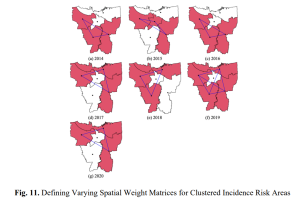
Air pollution doesn’t just harm the lungs—it also makes people more vulnerable to diseases like tuberculosis (TB). A new study has revealed how advanced statistical modeling can help us understand and predict the link between polluted air and TB, paving the way for better public health strategies.
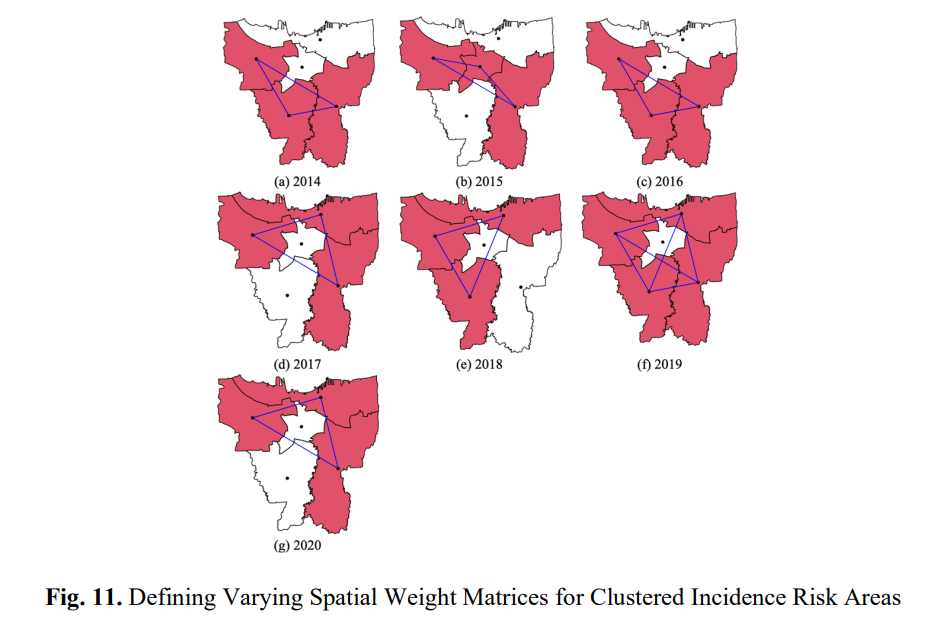
Researchers used a Bayesian Latent Gaussian Model with a special feature: time-varying spatial weight matrices. In simple terms, this method tracks how air pollution and TB cases change across locations and over time. Compared to older approaches, this model gives more precise predictions, especially when analyzing complex interactions between multiple pollutants.
The findings are eye-opening. The study shows that exposure to common air pollutants such as PM10, nitrogen oxides (NO₂), sulfur dioxide (SO₂), carbon monoxide (CO), and ozone (O₃) increases the risk of TB. Among these, NO₂ and SO₂ have the strongest impact, with a 21% and 13% rise in TB cases for every 1 mg/m³ increase in concentration.
This research has major implications for public health in cities like Jakarta, where both air pollution and TB remain serious challenges. By understanding how pollution worsens TB risks, policymakers can take targeted action—such as reducing emissions, improving air quality monitoring, and enhancing TB prevention programs.
The study directly connects with the United Nations Sustainable Development Goals (SDGs):
- SDG 3 (Good Health and Well-Being): By highlighting the health impacts of pollution, the study supports efforts to combat TB and improve overall health.
- SDG 11 (Sustainable Cities and Communities): Cleaner air means healthier urban living.
- SDG 13 (Climate Action): Tackling air pollution also helps in the fight against climate change.
While the study acknowledges some limitations—like using annual TB data instead of monthly records—it breaks new ground by being the first to reveal the spatial and temporal effects of air pollution on TB. The researchers suggest that future studies focus on refining the models and applying them to real-world health strategies.
This work is a powerful reminder that fighting TB isn’t just about medicine—it’s also about cleaner air, better data, and smarter policies.
Source: https://www.growingscience.com/ijds/Vol9/ijdns_2024_135.pdf
Stat-01/24