

Flame-Resistant Ramie Fabrics: A Safer Step Toward Sustainable Textiles

A team of researchers has introduced a breakthrough in developing safer and more sustainable textiles by enhancing the fire-resistant properties of ramie fabric—a natural fiber derived from Boehmeria nivea. This innovation aligns with the United Nations’ Sustainable Development Goals (SDGs), particularly SDG 9 (Industry, Innovation, and Infrastructure) and SDG 12 (Responsible Consumption and Production).
Turning Natural Fibers into Functional Textiles
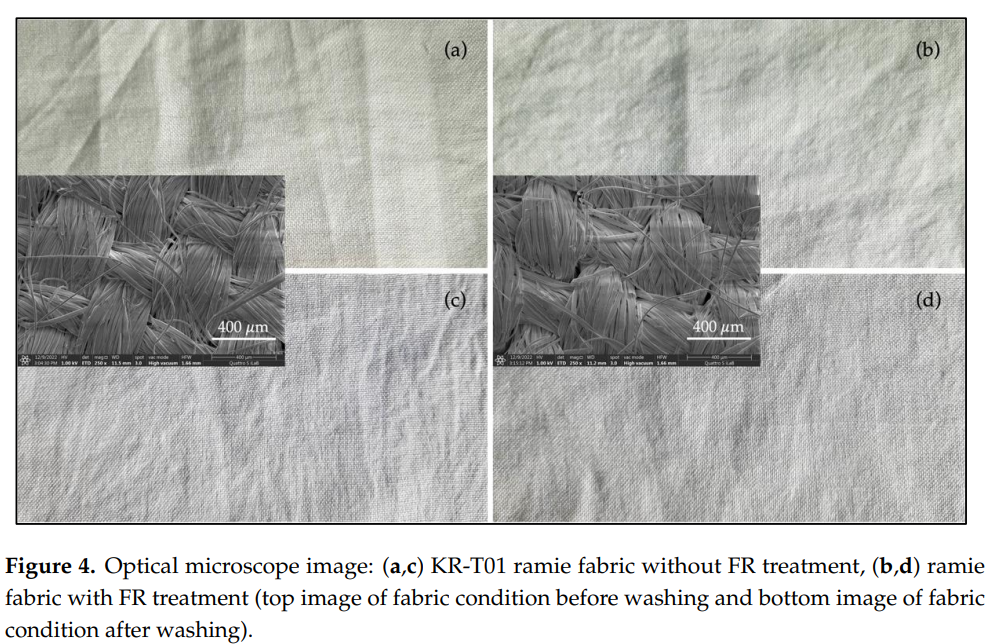
The study focused on optimizing the flame-retardant characteristics of ramie using a phosphorus-based flame retardant (FR). By applying a special finishing formula that included phosphoric acid and a resin solution, the treated fabric showed remarkable resistance to fire.
In standardized tests, ramie fabric treated with a 50% FR formula achieved a limiting oxygen index (LOI) value of 29 and a char length of only 15–30 mm—demonstrating its strong ability to prevent fire spread.
Safer and More Practical Process
Unlike traditional lamination methods, this new approach uses non-toxic organophosphorus material in a streamlined process. This makes it more practical for mass application while ensuring both safety and environmental responsibility.
Wide-Ranging Applications
The potential uses of flame-retardant ramie fabric are vast. It could be applied in:
- Protective clothing for firefighters, military personnel, and oil & gas workers
- Automotive interiors where fire safety is crucial
- Everyday safety products, including fire blankets, carpets, curtains, and furniture upholstery
By reducing fire risks, these innovations not only save lives but also help industries adopt more eco-friendly materials, reducing reliance on synthetic textiles.
Linking to the SDGs
This research directly supports:
- SDG 9 (Industry, Innovation, and Infrastructure): advancing safer and innovative materials for industrial and commercial use.
- SDG 12 (Responsible Consumption and Production): promoting the use of natural, sustainable fibers while minimizing environmental impact.
With such advances, ramie fabric could soon become a key player in functional textiles, combining safety, sustainability, and innovation.
Source: https://www.mdpi.com/1996-1944/17/6/1416
Bio-01/24