

Flood Bonds: Innovative Funding to Tackle Flood Losses in Indonesia and Support SDGs

Flooding is one of Indonesia’s most frequent and costly natural disasters, causing significant economic losses every year. However, government budgets are often insufficient to cover the damages. A recent study introduces an innovative financial solution—flood bonds—as an alternative funding source to mitigate flood losses.
How Flood Bonds Work
Flood bonds function as a financial instrument where investors provide funds that can be used by the government if severe flooding occurs. The claim trigger is based on maximum rainfall levels, which are easy to measure, transparent, and minimize disputes or moral hazards in the claims process.
The study models flood bond prices using advanced mathematical methods, accounting for Indonesia’s unique weather patterns, including the varying durations of rainy and dry seasons.
Key Insights from the Study
- Rainfall triggers matter: The higher the rainfall trigger set for the bond, the more expensive the bond becomes, since the chance of payout is lower—making it attractive to investors.
- Seasonal patterns influence prices:
- Longer dry seasons raise bond prices, as floods are less likely.
- Longer rainy seasons lower bond prices, as the flood risk increases.
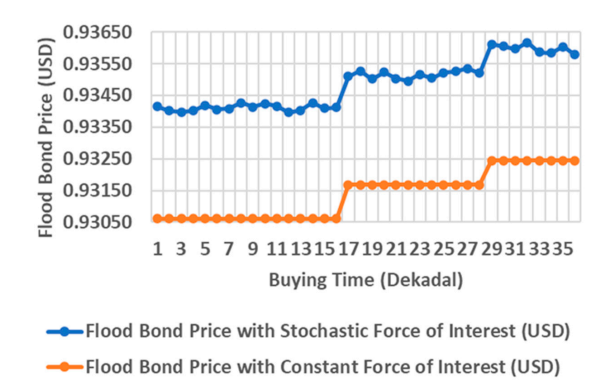
- Dynamic interest rates: Using a stochastic (changing) force of interest provides more accurate results than using a constant rate, making pricing more realistic.
Why This Matters for Indonesia
This model helps the government and financial institutions to:
- Better estimate the true value of flood bonds,
- Provide faster and fairer claim assessments,
- Strengthen financial resilience against disasters, and
- Reduce reliance on state budgets alone.
Connection to the SDGs
This innovation strongly supports several United Nations Sustainable Development Goals (SDGs):
- SDG 11: Sustainable Cities and Communities – by offering financial protection against urban flooding.
- SDG 13: Climate Action – by preparing adaptive financing tools to cope with extreme weather.
- SDG 9: Industry, Innovation, and Infrastructure – by developing innovative financial instruments that benefit both investors and communities.
Looking Ahead
While the model provides valuable insights, the study notes future improvements are needed, such as considering flood intensity and inflation for even more precise results. Still, flood bonds could become a powerful tool for disaster risk financing in Indonesia, ensuring communities are better protected from the economic shock of floods.
Source: https://www.mdpi.com/2073-4441/16/15/2102
Mat-05/24