

Mathematicians Tame the Chaos in Global Supply Chains, Boosting Resilience and Sustainability
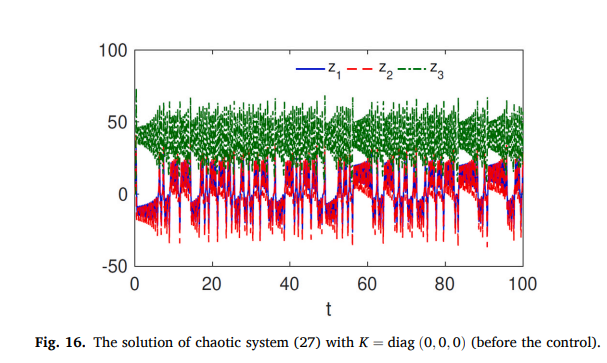


New research uses advanced fractional calculus and AI-inspired control to model and stabilize the unpredictable chaos in supply chains, offering a path to achieve the UN’s goal of resilient infrastructure and sustainable industrialization.
In the wake of global disruptions that have highlighted the fragility of our interconnected world, a team of international researchers has developed a groundbreaking new method to understand and control the inherent chaos in supply chains. Published in the journal *Heliyon*, this study uses a sophisticated branch of mathematics called “fractional calculus” to create a more accurate model of supply chain dynamics and then applies a control mechanism to stabilize it. This work directly contributes to building more resilient infrastructure and promoting sustainable industrialization, a core aim of UN Sustainable Development Goal 9 (Industry, Innovation, and Infrastructure).
Why Supply Chains Behave Like the Weather
Supply Chain Management (SCM) is the complex process of moving goods from manufacturer to consumer. Traditionally, it has been modeled using equations that assume the present state depends only on immediate, recent events. However, real-world supply chains have “memory”; a disruption like a pandemic or a port closure can have ripple effects for months or even years. This creates chaotic, unpredictable behavior that is incredibly difficult to manage with traditional models.
This is where fractional calculus comes in. Lead researcher Muhamad Deni Johansyah explains that this advanced math is perfect for modeling systems with memory and hereditary traits, allowing for a much more realistic representation of how a supply chain actually operates. “It’s the difference between predicting the weather based only on today’s conditions versus using data from the past several weeks,” he says.
From Modeling Chaos to Imposing Order
The team’s first achievement was to prove that their complex “Fractional-Order Supply Chain Management” model is mathematically sound and has a unique solution. They then used tools like Lyapunov exponents and bifurcation diagrams to analyze the model’s chaotic behavior, confirming its volatility.
The crucial next step was to tame this chaos. The researchers designed and implemented a Linear Feedback Control (LFC) method. Think of this as a sophisticated autopilot for the supply chain: it constantly monitors key variables (like retailer demand, distributor supply, and production quantity) and makes tiny, automatic adjustments to keep the entire system stable and on track, preventing small disruptions from spiraling into major crises.
Building a Foundation for a Sustainable Future
The implications of this research are significant for achieving a stable and sustainable global economy:
* Enhanced Resilience (SDG 9): By providing a tool to predict and mitigate disruptions, this model helps companies build supply chains that are resistant to shocks, from geopolitical events to natural disasters. This strengthens industrial infrastructure and prevents costly breakdowns.
* Reduced Waste (SDG 12) – Responsible Consumption and Production): Unpredictable supply chain chaos often leads to overproduction, rushed shipping, and wasted resources. A more stable and predictable system promotes efficiency and reduces the environmental footprint of logistics.
* Economic Stability: Stable supply chains are the backbone of economic growth. Preventing chaotic swings ensures that goods are available, prices are more stable, and jobs are secure, contributing to broader economic health.
This study demonstrates that abstract mathematical theory is not just an academic exercise. It is a powerful, practical tool that can be used to design smarter, more resilient, and more sustainable systems for the real world, helping to create a future that can withstand whatever challenges come next.
Source: Johansyah, M.D., et al. (2024). Analyzing and Controlling chaos phenomena in fractional chaotic supply chain models. *Heliyon*, 10, e34703.
Link : https://www.sciencedirect.com/science/article/pii/S2405844024107347
Mat-02/24