

Researchers Tame Financial Chaos with AI, Paving the Way for Economic Stability
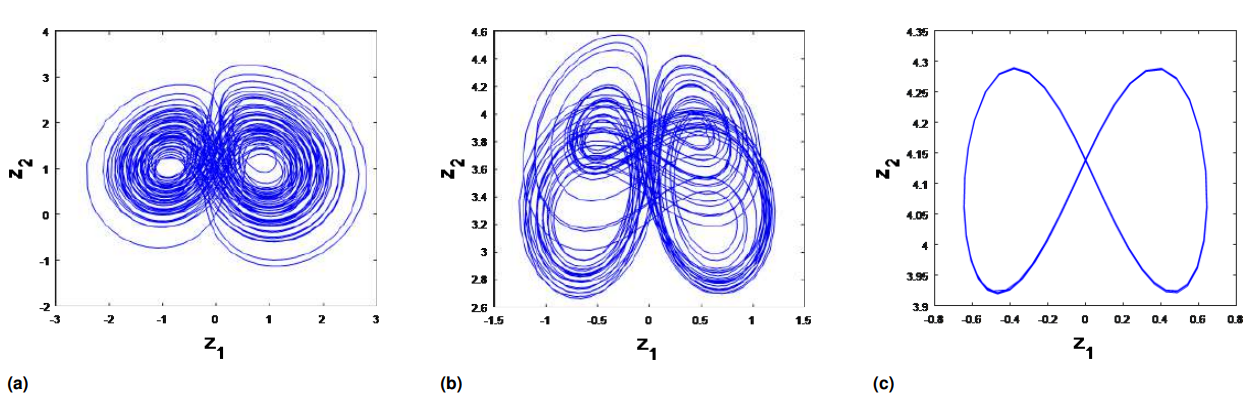

A new study harnesses cutting-edge mathematics and artificial intelligence to model and control the hyperchaotic nature of financial markets, offering a novel tool to support the UN’s goal of stable and inclusive economic growth.
In a world where financial markets can seem unpredictably volatile, a team of international researchers has made a significant breakthrough. They have developed a sophisticated new model that not only captures the extreme complexity of financial systems but also uses an advanced AI controller to keep them in check. This research, published in the journal *Chaos Theory and Applications*, provides a powerful new framework for understanding economic risks and could be a vital tool in promoting greater financial stability—a key target of the UN Sustainable Development Goal 8 (Decent Work and Economic Growth).
From Market Chaos to Predictable Patterns
Financial systems are inherently chaotic. Tiny, unpredictable events can ripple through the global economy, causing massive and seemingly random swings in profit margins and market stability. This “butterfly effect” makes it incredibly difficult for companies and policymakers to plan for the long term.
The research team, led by Muhamad Deni Johansyah, created a new “hyperchaotic” financial model. This model is a complex digital simulation that incorporates a unique mathematical twist—a hyperbolic sine function—to better represent the non-linear and often explosive behavior of factors like average profit margin.
“By analyzing the average profit margin in relation to chaotic dynamics, companies can conduct sensitivity analysis to assess the potential impact of various factors on their profitability,” the authors state. This means businesses can use such models to run simulations and identify which variables pose the greatest risk to their bottom line.
Harnessing AI to Synchronize Chaos
The real novelty of the research lies in its solution. After modeling the chaos, the team designed an Adaptive Neural Fuzzy Controller—a type of artificial intelligence that combines the learning power of neural networks with the logical reasoning of fuzzy systems.
This AI controller was tasked with a difficult job: synchronizing two identical but independently operating hyperchaotic financial models. Think of it as getting two wildly unpredictable, out-of-sync economies to move in perfect harmony. The AI controller successfully achieved this, effectively “taming” the chaos and demonstrating that intelligent systems can be used to stabilize complex financial dynamics.
Why This Matters for a Sustainable Future
The implications of this research extend far from the laboratory. Achieving SDG 8 involves promoting sustained, inclusive, and sustainable economic growth with full and productive employment. A fundamental prerequisite for this is financial stability.
* For Businesses: This model can serve as an advanced risk management tool, helping companies navigate uncertainty, protect profit margins, and make more resilient long-term investments.
* For Policymakers: Central banks and financial regulators could use such AI-powered systems to simulate the potential impact of new policies before implementation, helping to prevent unintended consequences and foster a more stable economic environment.
* For Global Development: Economic stability is the bedrock for creating jobs, reducing inequality, and fostering innovation. By providing tools to better understand and manage financial chaos, this research contributes to building the foundation for a more sustainable and prosperous global economy.
This study brilliantly demonstrates how abstract mathematical theory, combined with modern AI, can provide concrete solutions to real-world problems, turning the chaos of the market into a force that can be understood and managed for a more stable future.
Source: Johansyah, M.D., et al. (2024). A Novel Hyperchaotic Financial System with Hyperbolic Sinusoidal Nonlinearity: From Theoretical Analysis to Adaptive Neural Fuzzy Controller Design. *Chaos Theory and Applications*, 6(1), 26-40.
Link : https://dergipark.org.tr/en/pub/chaos/issue/83761/1336838
Mat-01/24