

Scientists Harness Advanced Mathematics to Predict and Prevent Supply Chain Collapse


New research uses chaos theory and sophisticated control algorithms to tame the unpredictable nature of global supply chains, directly supporting the UN’s goal for resilient infrastructure and sustainable industrialization.
From empty store shelves to delayed deliveries, the chaos in global supply chains has become a familiar frustration. Now, a team of international researchers has developed a powerful new method not just to understand this chaos, but to control it. By applying advanced mathematical theories of chaos and bifurcation, they have created a strategy to predict critical breaking points in supply networks and keep them running smoothly. This breakthrough offers a vital tool for building more resilient infrastructure and promoting sustainable industrialization, a core tenet of UN Sustainable Development Goal 9 (Industry, Innovation, and Infrastructure).
Finding Order in Chaos
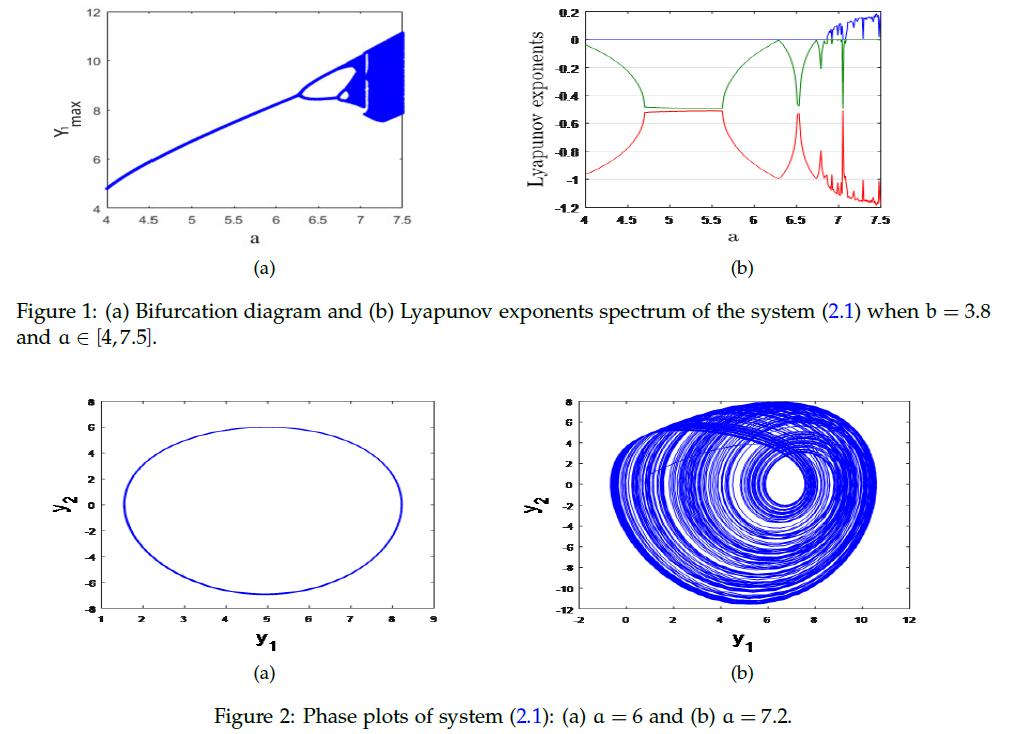
Supply chains are inherently complex systems involving retailers, distributors, and manufacturers. Small changes in demand or delays can snowball into massive disruptions, a phenomenon known as the “butterfly effect” in chaos theory. The research team, led by Muhamad Deni Johansyah, focused on identifying the exact moments—called “bifurcation points”—where a stable supply chain suddenly tips into chaotic behavior.
“Bifurcation points in a chaotic system represent critical thresholds where the system undergoes a qualitative change in behavior,” the authors explain. In practical terms, this could be the specific demand level that causes a distribution system to become unpredictable or a production delay that leads to widespread shortages.
The Autopilot for Global Logistics
Simply identifying the problem wasn’t enough. The team’s key innovation was developing a “backstepping controller”—a sophisticated mathematical algorithm that acts like an autopilot for the supply chain. This system continuously monitors the network and makes tiny, automatic adjustments to keep it stable, preventing it from veering into chaos even when faced with unexpected shocks.
The researchers demonstrated that this controller could perfectly synchronize two separate, chaotic supply chain models, forcing them to operate in harmony. This proves the potential for such a system to coordinate different parts of a real-world supply chain, ensuring that production, distribution, and retail are all aligned.
Building a Sustainable and Resilient Future
The implications for achieving global sustainability goals are significant:
* Preventing Waste (SDG 12 – Responsible Consumption & Production): Chaotic supply chains lead to overproduction, rushed shipping (increasing emissions), and wasted perishable goods. A stable, predictable system promotes efficiency and drastically reduces waste throughout the logistics pipeline.
* Economic Stability: By preventing collapses, this technology protects jobs and ensures the reliable delivery of essential goods, from medicine to food, contributing to stable economies and communities.
* Stronger Infrastructure (SDG 9): This research provides the mathematical backbone for building next-generation supply chains that are resilient to pandemics, geopolitical conflicts, and climate-related disruptions, forming a more robust industrial infrastructure.
This study moves beyond theory. By using numerical simulations, the team has shown their method is not only effective but also practically applicable. It turns the abstract science of chaos into a concrete tool for creating a more stable, efficient, and sustainable global economy.
Source: Johansyah, M.D., et al. (2024). Controlling the unpredictable: bifurcation and backstepping strategies in supply chain dynamics. *Journal of Mathematics and Computer Science*, 35, 229-240.
Mat-03/24