

Smarter Learning Platforms: Designing Adaptive LMS Interfaces Based on Cognitive Load to Support Quality Education

In today’s digital era, online learning platforms—or Learning Management Systems (LMS)—have become an essential part of education. However, many LMS platforms remain static, offering the same interface to every learner regardless of their abilities or needs. This often leads to ineffective learning experiences, especially when students face difficulties in processing too much information at once.
A new study titled “An Initial User Model Design for Adaptive Interface Development in Learning Management System Based on Cognitive Load” addresses this challenge by exploring how cognitive processes can shape smarter and more adaptive LMS interfaces.
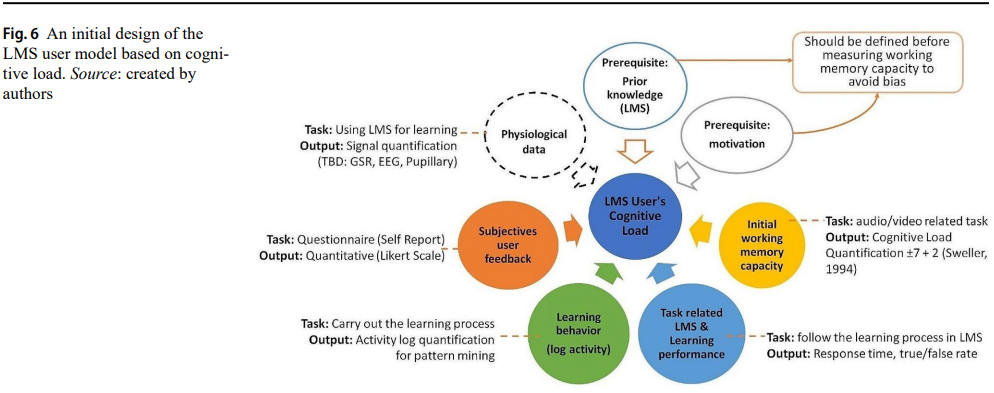
The research highlights the importance of understanding cognitive load—the mental effort used during learning—so that digital platforms can adjust to each learner’s capacity. By considering factors such as working memory, task performance, learning behavior, and even self-reported motivation, developers can design systems that respond dynamically to users’ needs.
Using interviews with cognitive experts and a soft system methodology, the researchers designed an initial user model for adaptive LMS. The model integrates various measurements, from learner logs to performance accuracy and even physiological data in controlled environments. This framework provides a foundation for creating interfaces that are not only more interactive but also tailored to individual learners.
The study concludes that combining objective (task performance, behavior, physiology) and subjective (self-report) methods is key to accurately capturing cognitive load. Looking ahead, the research team recommends further exploration using machine learning and adaptive engines to refine LMS designs. Such advancements could ensure that online learning platforms evolve alongside learners, rather than remaining rigid systems.
This innovation directly supports the United Nations Sustainable Development Goal (SDG) 4: Quality Education, which emphasizes inclusive and equitable education for all. By integrating cognitive science into LMS development, the study offers a pathway toward smarter, more effective digital learning tools—helping students learn at their own pace and ability level.
In a world where education is increasingly digital, creating adaptive systems based on human cognition could be a game-changer—ensuring that technology truly supports learning rather than overwhelming it.
Source: https://link.springer.com/article/10.1007/s10111-024-00772-8
TI-01/24