

Smarter Ride-Hailing, Greener Cities: New Model Tackles Travel Time Uncertainty


Getting a ride through apps like Grab, Gojek, or Uber has become part of daily life in many cities. But one of the biggest challenges for these services is uncertain travel time—traffic jams, road closures, or unpredictable weather can make it hard to match passengers with drivers efficiently.
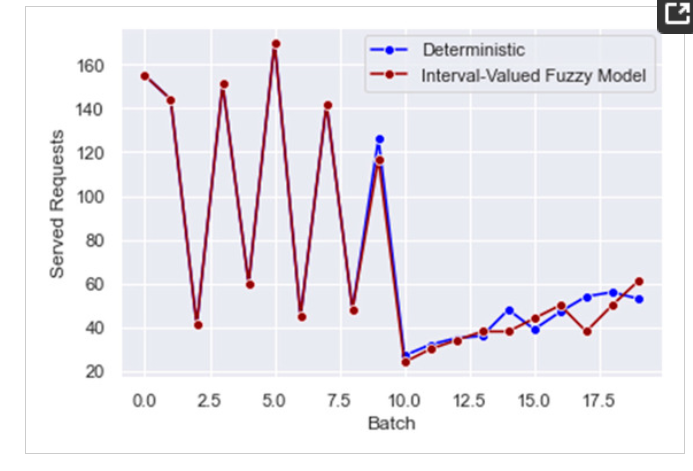
A new study introduces an innovative mathematical model that could change the way ride-hailing systems work. By using interval-valued fuzzy multi-objective linear programming, the research provides a smarter way to pair passengers and drivers, even when travel times are unpredictable.
A Smarter Way to Match Rides
Unlike traditional models that assume travel times are fixed, this new approach embraces uncertainty. It uses fuzzy logic—a mathematical method designed to handle vagueness—to create a more flexible and adaptive system.
The results are promising: compared to conventional methods, this model reduces mismatches between passengers and drivers, making rides faster, more efficient, and more reliable. In the future, researchers hope to expand the method to tackle more complex problems in logistics, manufacturing, and supply chains.
Why It Matters
Uncertainty in urban transport isn’t just an inconvenience—it affects energy use, emissions, and productivity. By improving ride-hailing efficiency, this research could help reduce wasted fuel from long waits or detours, cut carbon emissions, and support more sustainable cities.
Contribution to the SDGs
This breakthrough directly supports the United Nations Sustainable Development Goals (SDGs):
- SDG 11: Sustainable Cities and Communities – by making urban mobility more efficient and reliable.
- SDG 9: Industry, Innovation, and Infrastructure – by using advanced mathematical models to improve digital transport systems.
- SDG 13: Climate Action – by reducing unnecessary fuel consumption and emissions from inefficient ride-hailing operations.
The Road Ahead
The study’s authors suggest that future work could extend the method beyond ride-hailing to areas like logistics and supply chain management, where uncertainty is also a major challenge. If implemented widely, this innovation could pave the way toward smarter, greener, and more resilient transportation systems.
Source: https://www.mdpi.com/2227-7390/12/9/1355
Mat-12/24