
A new study highlights the crucial role of health protocol implementation in reducing COVID-19 transmission across different community activities in West Java, Indonesia. The research, published by a team of mathematicians, provides scientific evidence that strict adherence to health measures—such as mask-wearing, distancing, and hygiene practices—significantly helps suppress the spread of the virus.
Health Protocols Across Daily Activities
The study categorized society into three activity clusters:
- Retailing (markets, shops, malls)
- Transit (commuting and public transportation)
- Recreation (parks, leisure, and social gatherings)
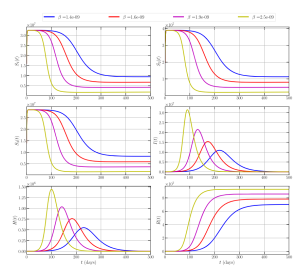
By developing a mathematical model, researchers analyzed how each cluster contributed to transmission risks and how health protocols could reduce infections. The model divided the population into groups—such as susceptible, infected, quarantined, and recovered—to simulate real-world scenarios.
Key Findings
The results showed that health protocol enforcement in all three clusters plays a decisive role in lowering infection rates. Even small increases in compliance could greatly reduce the number of people infected or quarantined.
The study also revealed that transmission patterns are highly sensitive to changes in individual behavior, meaning community discipline in following health measures remains a powerful tool—especially in crowded spaces like markets and public transit.
Relevance to Global Goals
This research strongly supports the United Nations Sustainable Development Goals (SDGs):
- SDG 3: Good Health and Well-being – by providing strategies to prevent disease spread and protect public health.
- SDG 11: Sustainable Cities and Communities – by offering insights into safer urban mobility and social spaces.
- SDG 17: Partnerships for the Goals – as it shows the importance of combining scientific research, policy, and community action in pandemic response.
Why It Matters
Although vaccination campaigns have reduced the global threat of COVID-19, the study emphasizes that health protocols remain essential in controlling future outbreaks. The findings remind policymakers and the public that simple daily practices still have a profound impact on community health.
Source: https://onlinelibrary.wiley.com/doi/abs/10.1002/mma.10103
Mat-04/24